Clients & Partners
Over 25 years, Permanent Steel Structure has supplied steel structures to state-owned EPC contractors, national energy groups, transportation authorities, industrial developers, and international project owners across five continents. This page describes the categories of clients we serve, the partnership model we operate under, and the quality signals that make clients return.
Five Client Categories, One Engineering Standard
Our clients are not anonymous "customers." They are engineering organizations — design institutes, general contractors, and project owners — who evaluate suppliers on technical capability, not on sales presentations. We describe them by category, because each category has different procurement criteria and different engineering requirements.
State-Owned EPC Contractors
Large-scale engineering, procurement, and construction contractors owned by the state or central government. These clients procure steel structures for nationally significant infrastructure — power plants, railway stations, airports, and industrial complexes. Their procurement process requires manufacturer qualifications (special-class steel structure manufacturing), full material traceability, and compliance with GB, AWS, or EN standards. They select suppliers through pre-qualification audits, not open bidding on price alone.
National Energy Groups
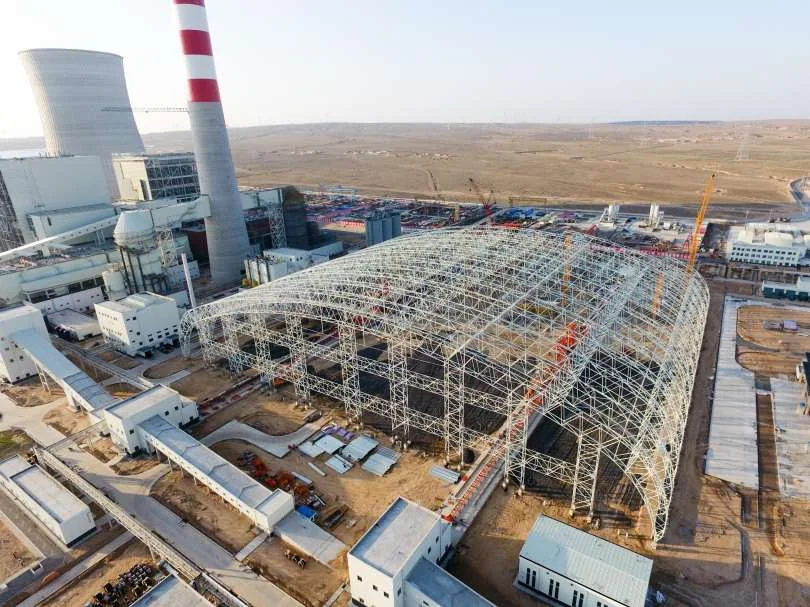
Power generation and energy infrastructure operators who require steel structures for coal storage facilities, hydropower station superstructures, and thermal power plant boiler buildings. These projects demand structures that withstand thermal cycling, coal dust exposure, and in some cases seismic loading. The 229-meter clear-span coal storage facility — the world's longest single-span coal shed — was fabricated for a national energy client.
Transportation Authorities
Railway bureaus, airport authorities, and municipal transportation departments responsible for high-speed rail stations, airport terminals, and bridge infrastructure. These clients require structures with tight erection schedules (railway line shutdowns are measured in hours, not days), full seismic compliance, and visual quality appropriate for public infrastructure. Guangzhou Baiyun Airport Terminal 3 and Xuzhou East High-Speed Rail Station are representative projects.
Industrial Developers
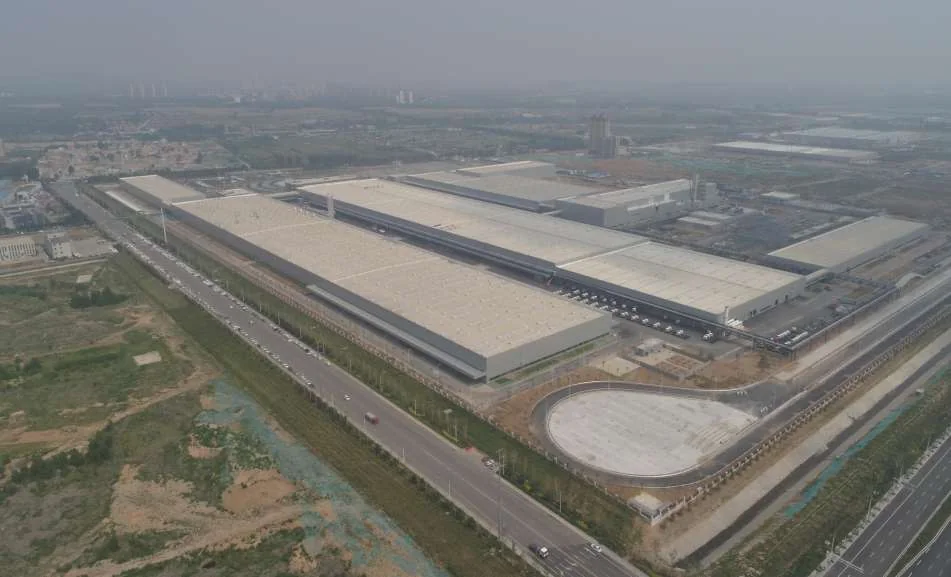
Manufacturing enterprises building production facilities, assembly workshops, and logistics centers. These clients need fast delivery, large clear spans, and structures that accommodate heavy overhead cranes, process equipment, and dynamic loads from production lines. Representative projects include the GAC (Guangzhou Automobile Group) workshop and the Sinotruk commercial vehicle assembly facility — both requiring column-free spans exceeding 30 meters with crane capacities of 50+ tons.
International Developers
Overseas project owners and international EPC contractors who source steel structures from China for infrastructure projects in their home countries. These clients require export-grade documentation (mill test certificates, welding procedure specifications, NDT reports), international standard compliance (AISC, EN 1090, AS 4100), and containerized shipping logistics. Representative international projects include the Pakistan Karot and Tarbela hydropower stations, the Indonesia Jinrui nickel smelter, the Congo airport terminal, and the Antarctica Ross Sea Research Station.
Organizations Behind Our Published Projects
We do not publish a client logo wall. Many of our clients are state-owned enterprises and international developers whose procurement relationships are confidential. However, several clients are identifiable from publicly described projects in our portfolio. The following references are drawn verifiably from our published project descriptions.
Guodian (State Power Investment Corporation)
Guodian — one of China's five largest state-owned power generation groups — and affiliated energy entities are associated with our power sector projects, including the 229-meter clear-span coal storage facility. This project required a spatial grid structure of unprecedented span, designed to withstand coal pile lateral pressure, wind loads on a 229-meter uninterrupted roof, and thermal expansion across a structure longer than two football fields. The client's procurement standard required special-class steel structure manufacturing qualification — a credential held by fewer than 30 companies in China.
Guangzhou Automobile Group (GAC)
GAC, one of China's largest automotive manufacturers, commissioned a new-energy vehicle workshop facility using our prefabricated steel structure system. The workshop required a column-free production floor with overhead crane capacity for vehicle assembly line equipment, supplemented by mezzanine-level utility platforms. The structure was fabricated to AWS D1.1 weld acceptance criteria, with all primary welds ultrasonically tested and 100% of crane runway beams magnetic-particle tested at the support brackets.
Sinotruk (China National Heavy Duty Truck Group)
Sinotruk, China's largest manufacturer of heavy-duty commercial vehicles, is associated with our commercial vehicle workshop project. The facility required wide-span portal frames with heavy crane capacity (50-ton double-girder cranes), crane runway beams designed for fatigue loading under repeated crane cycles, and floor slabs integrated with the steel frame for equipment anchorage. Fatigue-critical details — particularly the crane runway beam-to-column connections — were designed and fabricated to GB 50017 and verified by UT on 100% of complete-joint-penetration welds.
China Railway and Railway Bureaus
China Railway Group and its affiliated railway construction bureaus are associated with our transportation infrastructure projects, including the Xuzhou East High-Speed Rail Station. High-speed rail station structures require seismic design to the highest performance level (Performance Objective 1 under GB 50011), because post-earthquake functionality of transportation infrastructure is critical for emergency response. The station structure used a spatial grid roof system with seismic isolation detailing at the column bases — a design approach that required our special-class spatial grid qualification.
Airport Authorities
Guangzhou Baiyun International Airport Authority is associated with the Terminal 3 project, which used our spatial grid structure for the terminal roof. Airport terminal roofs require long clear spans (to avoid columns interrupting passenger flow), resistance to wind uplift (large flat roof areas create significant uplift forces), and visual quality that meets the architectural standard expected of a gateway infrastructure project. The Guangzhou Baiyun Airport T3 grid structure was pre-assembled and 3D-scanned in our workshop before shipping — a quality step that prevented any field rework during the airport's tight construction schedule.
Three Partnership Tiers: Design, Contracting, and Logistics
Steel structure procurement is not a single transaction. It involves design coordination, manufacturing, quality documentation, and shipping. We structure our partnerships around the three interfaces where miscommunication causes the most project delay.
Design Institute Coordination
Most of our projects originate from a design institute — the engineering firm that produces the structural design and specifies the steel grade, member sizes, connection details, and coating system. We engage with design institutes at three levels: (1) manufacturing feasibility review, where we assess whether the design details are fabricable with our equipment and suggest modifications where they are not; (2) value engineering, where we propose alternative connection details or member geometries that achieve the same structural performance at lower fabrication cost; and (3) design optimization for spatial grid structures, where our proprietary design software can optimize member layouts and node geometries beyond what general-purpose structural software produces.
This early engagement is the single most effective way to reduce project cost and schedule. When a design arrives at the workshop already optimized for manufacturability, the entire downstream process — cutting, welding, coating, and shipping — proceeds without rework. When a design arrives with details that are structurally sound but fabrication-hostile (blind welds, inaccessible joints, members too large for our equipment), the cost of workarounds accumulates across every production line. We prefer to catch these issues at the design review stage, not on the workshop floor.
General Contractor Integration
For most projects, our client or contracting partner is the general contractor (GC) who manages the overall construction site — foundations, steel erection, cladding, mechanical, and finishes. We integrate with the GC's project schedule at two critical points: (1) delivery scheduling, where we sequence fabrication and shipping to match the erection sequence so that members arrive on site in the order the crane will pick them, not in the order they were fabricated; and (2) site support, where we provide erection supervision for complex structures (spatial grids, pipe trusses with compound-angle joints) to ensure that field assembly matches the workshop pre-assembly geometry.
The erection sequence point is more important than it sounds. A spatial grid structure comprises hundreds of members and nodes. If they arrive on site in fabrication order rather than erection order, the site becomes a sorting yard — members are unloaded, searched for, and re-staged before the crane can pick them. We provide the GC with a shipping sequence plan that matches the erection sequence, so that the truck that arrives on Day 1 carries the members the crane will erect on Day 1. This coordination reduces site labor and crane time by an estimated 15–20%.
Logistics and Export Partners
For international projects, we partner with freight forwarders and logistics companies that specialize in oversized and heavy-lift steel cargo. Steel structure members are not container-friendly — a 15-meter box column or a 400mm pipe truss segment does not fit in a standard container. Our logistics partners handle breakbulk shipping, open-top container loading for medium members, flat-rack loading for oversized members, and port-to-site inland transport at the destination country. We provide the packing list with member dimensions, weights, and lifting points so the logistics partner can plan vessel loading and trailer routing before the first member leaves the workshop.
Quality Signals That Earn Repeat Business
Clients do not return because of marketing. They return because the structure arrived on schedule, fit together without rework, and passed inspection without dispute. The following awards and credentials are the external verification of that performance — not claims we make, but recognition we have received.
Prize (China's Highest Construction Quality Award)
Steel Structure Gold Award
National Specialized Enterprise
Luban Prize. The Luban Prize is China's highest award for construction quality, administered by the China Construction Industry Federation. It is awarded to projects, not to companies — meaning that a specific structure we fabricated was evaluated against the highest national quality standard and passed. The prize is not a marketing credential; it is a project-level verification that the steel structure met dimensional, weld quality, and coating standards at the highest level.
Steel Structure Gold Award. Awarded by the China Steel Structure Association, this recognizes excellence specifically in steel structure engineering and fabrication. It is distinct from the Luban Prize (which covers all construction types) because it evaluates steel-specific criteria: weld quality, connection design, coating system performance, and fabrication precision.
National Specialized "Little Giant." This is a Ministry of Industry and Information Technology (MIIT) designation for enterprises that occupy a leading position in a specialized industrial niche. For us, that niche is spatial grid structure and high-end steel structure manufacturing. The designation confirms that our engineering capability in this specific domain is recognized at the national policy level — not as a general construction company, but as a specialized manufacturer.
Repeat client rate. While specific client names are often confidential, the pattern is consistent: clients who place their first order for a standard structure (an industrial workshop, a warehouse) return for their next project with a more complex structure (a long-span grid, a bridge, a seismic-rated station). This progression — from simple to complex — is the strongest trust signal we can point to. Clients do not escalate the complexity of structures they entrust to a supplier unless the first structure performed as engineered.
Steel Structures Exported to Four Continents
Our international portfolio demonstrates that our engineering and fabrication standards meet international code requirements — not just Chinese GB standards, but the standards demanded by project owners and regulators in their own jurisdictions.
Pakistan — Hydropower Infrastructure
Two major hydropower projects in Pakistan — the Karot Hydropower Station on the Jhelum River and the Tarbela Dam expansion — used steel structures fabricated in our Xuzhou workshop and shipped to site by breakbulk vessel through Karachi port. These projects required structures engineered for seismic loading (Pakistan is in a high seismic zone), monsoon-season humidity during transport, and hydropower-specific loads including penstock support and turbine hall crane loads. The anti-corrosion system for these projects was upgraded beyond Chinese domestic norms to meet the project owner's specification for tropical-climate corrosion resistance.
Indonesia — Industrial Smelter
The Jinrui nickel smelter project in Indonesia required steel structures for the smelter building, including heavy equipment support platforms and pipe rack structures. The structure was designed and fabricated to meet Indonesian seismic code (SNI 1726), with hot-dip galvanizing on select members for the coastal-industrial environment. The project demonstrates our capability to deliver structures compliant with a non-Chinese national code — a requirement for international projects where the destination country's building authority does not accept GB-standard structures without conversion.
Congo — Airport Terminal
The Congo airport terminal project required a spatial grid roof structure designed for tropical climate conditions, including high humidity, thermal expansion across a large roof area, and resistance to biological growth on the roof surface. The structure was pre-assembled and 3D-scanned in our workshop, then containerized and shipped to Central Africa, where our site supervision team assisted the local contractor with erection. This project demonstrated that workshop pre-assembly and 3D verification can eliminate the need for field rework even when the site is thousands of kilometers from the workshop.
Antarctica — Ross Sea Research Station
The Antarctic Ross Sea New Station is the most extreme-environment project in our portfolio. The structure was engineered for −40°C service temperature, C5-M marine atmospheric corrosion, wind loads exceeding 200 km/h, and snow accumulation loads. Every bolted connection had to align perfectly in conditions where field rework is physically impossible — there is no grinder or welding machine available at the construction site in Antarctica during the narrow construction window. This project is the ultimate proof that our workshop precision standards are not theoretical: when field rework is impossible, the structure must fit on the first attempt. It did.
Start a Project With Us
Whether you are a design institute evaluating fabrication feasibility, a general contractor planning an erection sequence, or an international developer sourcing structures from China, our engineering team responds within 24 hours.
Contact Our Team