
Your Roof Is Idle 8,760 Hours a Year. We Make It Work.
A conventional metal roof has one job: keep weather out. A BIPV roof has two: keep weather out and generate power. The engineering challenge is that photovoltaic cells and metal roofing have different thermal expansion coefficients, different structural behaviors and different weathering profiles. Most BIPV systems on the market are bolt-on solar panels retrofitted to a standard roof — they leak, they delaminate, they void the roofing warranty.
Our system is different. As a metal construction company in China with structural engineering capability, we design the roofing substrate and the photovoltaic integration as one system from the outset. The standing seam is the PV mounting rail. The weather seal is the electrical enclosure. There is no "retrofit" because the solar is built in.
What Makes Up a Metal Roof BIPV System
Standing Seam Metal Roofing Substrate
Aluminum-zinc coated steel or aluminum alloy panels with 360-degree double-locked standing seams. The seam acts as both the weather seal and the mounting rail for PV modules — no penetrations, no screw holes, no leak paths.
- Panel width: 300-600mm (custom)
- Panel thickness: 0.5-1.0mm
- Substrate: Al-Zn coated steel, aluminum, stainless
- Coating: PVDF (25-year color warranty)
Integrated Photovoltaic Modules
Monocrystalline silicon PV cells laminated directly onto the metal panel surface, or frameless glass-on-metal BIPV panels that replace traditional roofing. No separate racking system. The roof IS the solar array.
- Cell type: Monocrystalline PERC / TOPCon
- Module efficiency: 21-23%
- Output range: 100-250W per panel
- Inverter: Micro-inverter or string inverter
Thermal & Acoustic Insulation
The envelope system integrates insulation core between the metal skin and the interior — reducing thermal bridging, controlling condensation and dampening rain noise. Available with PIR, mineral wool or vacuum insulation panels for different thermal targets.
- Insulation: PIR / Rockwool / VIP
- Thermal value: 0.15-0.30 W/m2K
- Fire rating: Class A (rockwool option)
- Acoustic: 25-35 dB reduction
Daylighting & Accessories
Polycarbonate or glass fiber reinforced polyester (FRP) skylight panels integrated flush with the metal roof profile. Ridgelights, perimeter gutters, snow guards, walkway systems and fall protection all engineered as part of the system, not bolted on as afterthoughts.
- Skylights: Polycarbonate / FRP / glass
- Light transmission: 40-80%
- Gutters: 0.6-1.2mm coated steel
- Walkways: Anti-slip FRP grating
Applications Where the Numbers Work
BIPV is not for every project. Here are the scenarios where the economics are compelling — large roof areas, long building lifespans and grid electricity costs that make self-generation attractive.
 Industrial
 & Logistics Warehouses
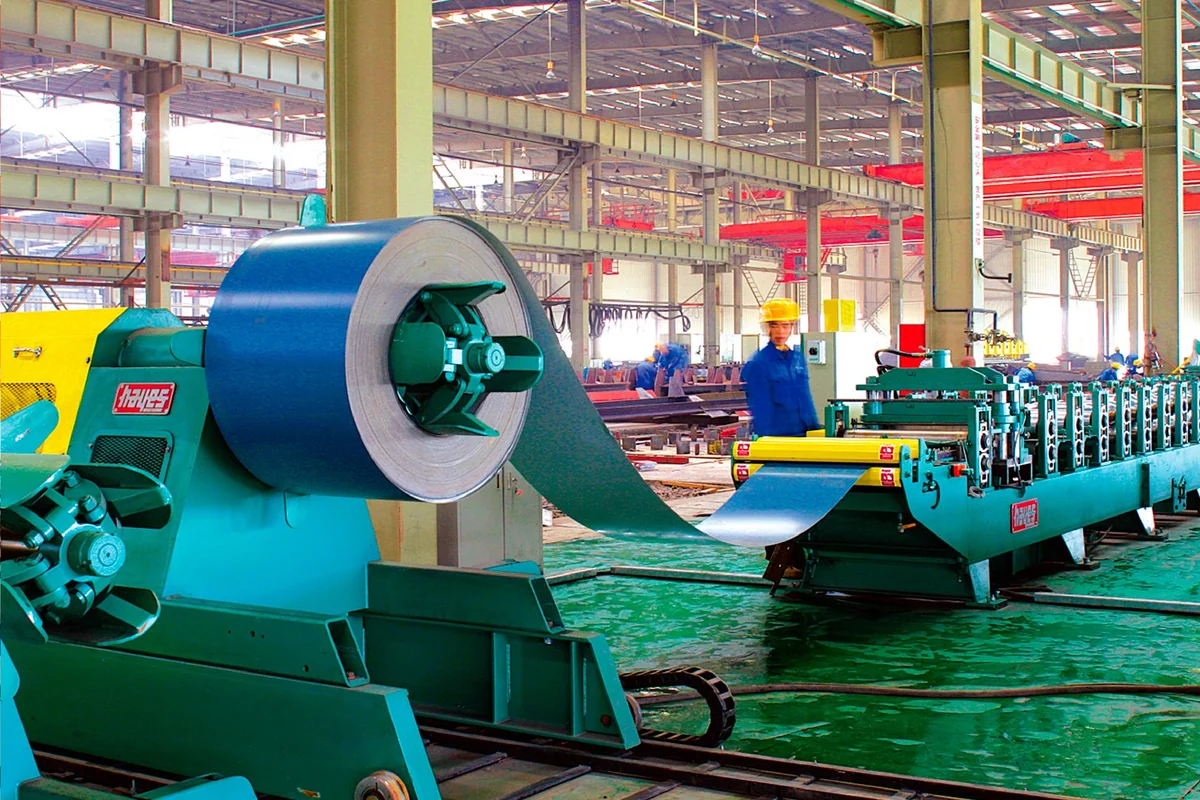
Large flat or low-slope roofs (5,000-50,000m²) on warehouses and distribution centers. The roof area is ideal for solar — large, unshaded, structurally capable. Payback in 5-8 years in markets with net metering or feed-in tariffs.
 Commercial
Airport & Transit Terminals
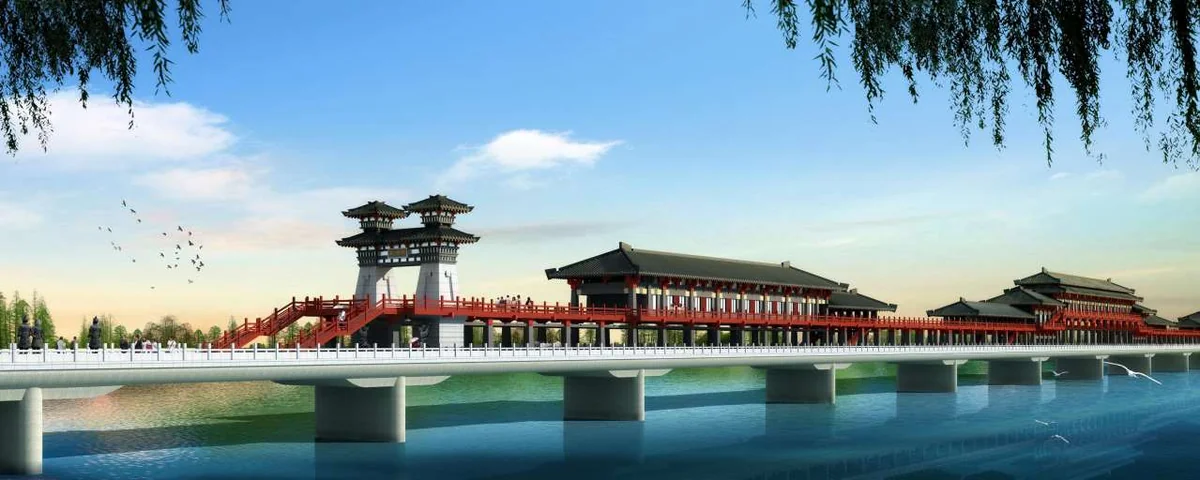
Curved metal roofs on airport concourses and rail station canopies. The architectural form is already metal — BIPV turns it into a power plant without compromising the design. Carbon reduction supports green building certification.
 Public
Stadiums & Exhibition Halls
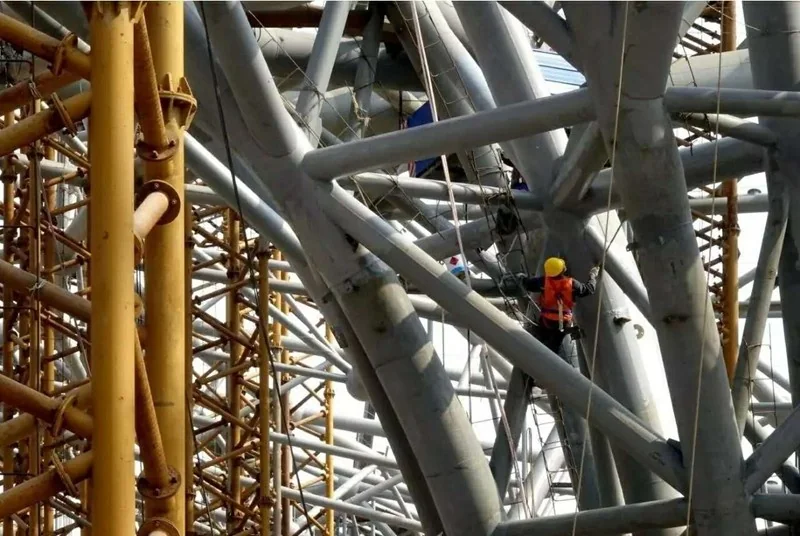
Wide-span roofs on sports venues and convention centers. The roof is the most visible part of the building — making it generate power is a public statement of sustainability commitment. Combined with our spatial grid structure system.
 Manufacturing
 Facilities
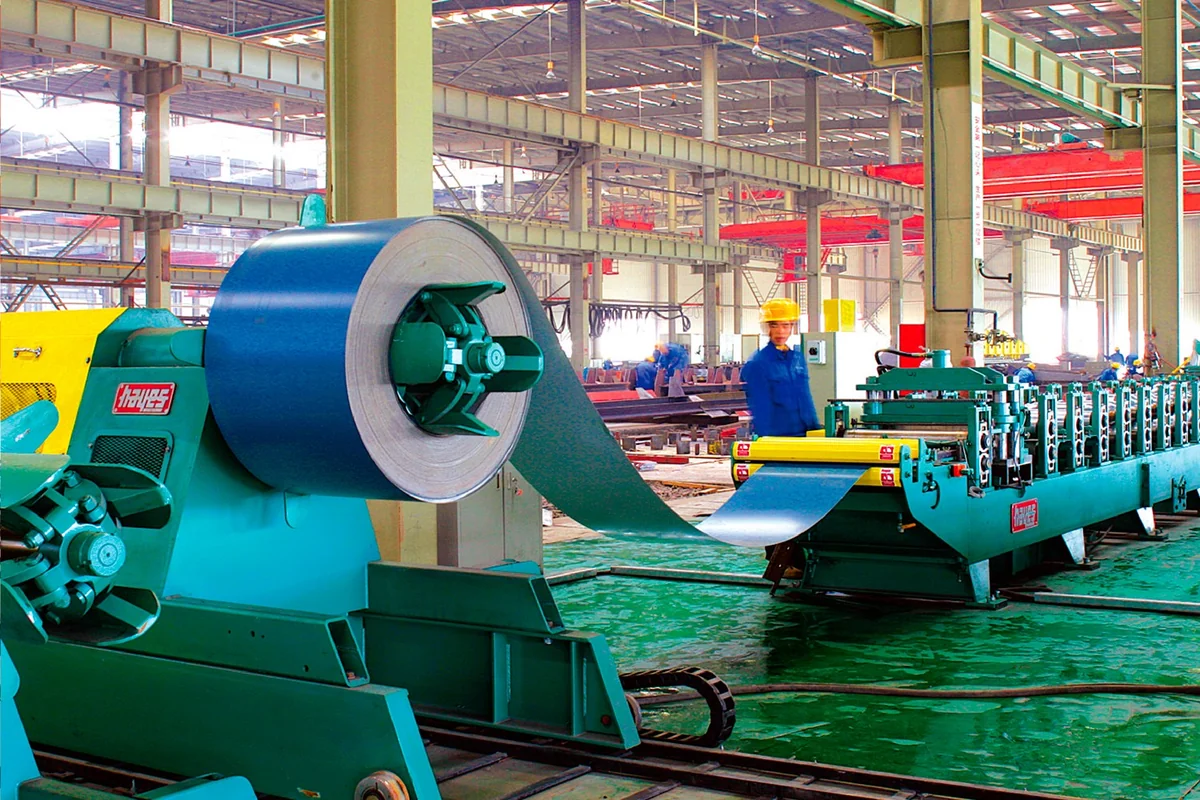
Steel structure workshops with metal roofing that powers the factory below. The highest-ROI application — industrial buildings consume large amounts of electricity during the day, exactly when the solar roof is generating. Peak demand shaving.
The Difference Between BIPV and "Solar on a Roof"
No Roof Penetrations
Bolt-on solar racking systems drill hundreds of holes into your metal roof. Every hole is a potential leak. Our BIPV system clips PV modules onto the standing seam — zero penetrations, roof warranty intact.
Unified Thermal Design
Bolt-on solar adds thermal load to a roof that was not designed for it. Our system engineers the insulation, ventilation gap and PV layer together — managing heat buildup that would otherwise degrade both roof and panel efficiency.
Single Warranty
With bolt-on solar, the roofing contractor blames the solar installer for leaks, and the solar installer blames the roofer for poor substrate. We provide one warranty covering the entire envelope system. One call, one accountable party.
Structural Integration
We design the structural roof deck and the BIPV modules as one load path. Wind uplift, snow load and PV dead load are all engineered in a single structural model, not bolted on as an afterthought.
Want a Roof That Pays for Itself?
Send us your building dimensions, location and energy tariff. We will calculate the system size, estimated annual generation and payback period. Engineering review within 24 hours.
Request BIPV System Quote