
Steel vs Concrete Whole-Life Cost: A 25-Year Lifecycle Analysis
The question "is steel or concrete cheaper?" has no honest one-word answer, because the two materials compete on different metrics across a building's life. Steel usually costs more at the tender stage per square meter for simple low-rise buildings; concrete usually costs more to change, extend, or demolish. Between those two points lie 25 years of maintenance, operation, adaptation, and finally recovery value — and the material that "won" at procurement is not necessarily the material that wins over the building's lifetime.
This article applies the whole-life cost (WLC) method defined by ISO 15686-5 and compares steel-framed and concrete-framed industrial buildings over a 25-year horizon using net present value (NPV). The purpose is not to argue that steel is always better — it is not — but to give buyers a decision framework with honest numbers, so the comparison is made on the same basis as the money they will actually spend.
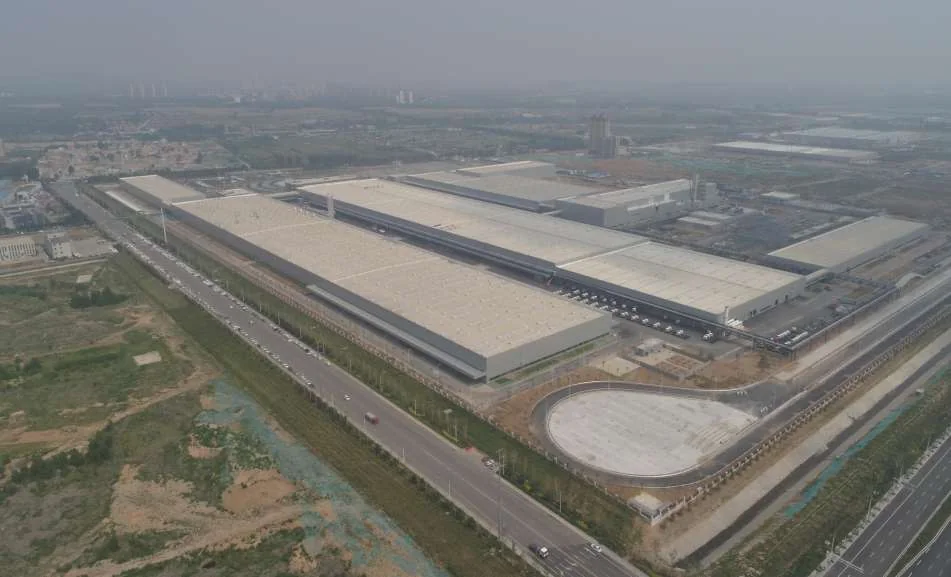
1. Why First Cost Misleads
Construction procurement instinctively compares tender prices, which is correct for a budget estimate but wrong for a capital decision. A building is an investment whose cost continues for decades: operating expenses, maintenance cycles, insurance, adaptation when the business changes, and finally demolition or resale. ISO 15686-5 structures these into construction cost, operation cost, maintenance cost, and end-of-life cost, each discounted to a common present value.
The discount rate is the single most sensitive input. A discount rate of 8% (a typical figure for commercial investment analysis) means US$1 paid in year 25 is worth only about US$0.15 today. Costs that occur late in life — like a major repaint in year 20 — therefore influence the decision far less than money spent in year one or revenue earned in year two. This is precisely why a slightly more expensive building that produces revenue earlier can win on NPV, and why NPV, not tender price, is the correct comparison.
2. Initial Construction Cost
For a straightforward industrial building, the structural frame is typically 20–30% of total construction cost, and the steel-versus-concrete difference within that share is real but bounded. Typical market ranges for an export context (structural frame supply and erection, excluding cladding, services, and foundations):
- Steel frame, 20–30 m span: frame cost typically US$45–90 per square meter of floor area, depending on tonnage and coating specification.
- Concrete frame (columns, beams, slabs) equivalent: commonly in a similar total band once formwork, rebar, and in-situ labor are included, but with a different profile — higher site labor share, longer duration, and typically heavier foundations because the frame weighs more.
- Foundations: steel frames commonly require lighter foundations for the same building — a 2–4 t column load versus several times that on a concrete column — saving perhaps 5–10% of foundation cost in good soils; the advantage narrows in high-seismic or high-wind zones where anchor and base-plate detailing grows.
The honest summary: first cost is close for many buildings, with steel slightly lower for long clear spans and concrete slightly lower for small, repetitive, low-clearance structures where local formwork labor is cheap. The decision should never rest on first cost alone.
3. Time Value: Earlier Revenue
Steel's clearest financial advantage is schedule. A steel frame is fabricated off site while foundations and site works proceed; erection of a typical 5,000 m² warehouse frame takes 4–8 weeks with a modest crew, versus 3–6 months of concrete frame construction for an equivalent building. For most industrial projects, the structure is not the full schedule — cladding, services, and commissioning follow — but occupancy is commonly accelerated by 1–4 months.
That acceleration has a computable value. For a warehouse renting at US$4–6 per square meter per month, a 5,000 m² building earns US$20,000–30,000 per month. Two months of earlier occupancy is worth US$40,000–60,000 — often enough to offset the entire frame-price difference between steel and concrete. For a factory whose production starts earlier, the value is the operating margin for the months gained. Buyers who ignore this line item systematically overpay for slow construction.
4. Maintenance and Coating Cycles
Steel needs corrosion protection; concrete needs crack and carbonation management. The honest comparison over 25 years:
- Steel: with an ISO 12944 C3 coating system, the first full maintenance repaint typically falls at 10–15 years, and a second at 20–30 years. In C4/C5 industrial and coastal environments, cycles shorten to 7–10 years. Maintenance cost is the coating area — predominantly the cladding supports and exposed members — at a cost per square meter well below the original coating because surface preparation is partial.
- Concrete: correctly designed reinforced concrete requires little routine maintenance in benign environments, which is a real advantage. But concrete repairs are expensive when they arrive: crack injection, carbonation repair, and chloride remediation run several times the unit cost of repainting steel, and are triggered by processes that are hard to predict or schedule. In aggressive environments (marine, chemical), concrete's apparent maintenance advantage narrows or reverses.
- Cladding and roof: both systems share the same envelope costs; the frame material does not change roof replacement cycles of 15–25 years for metal roofs.
For a 25-year horizon, steel's maintenance burden is a scheduled, budgetable event; concrete's is lower on average but lumpier and less predictable. NPV treats these differently because timing is uncertain — yet both are dwarfed by the schedule and flexibility effects discussed here.
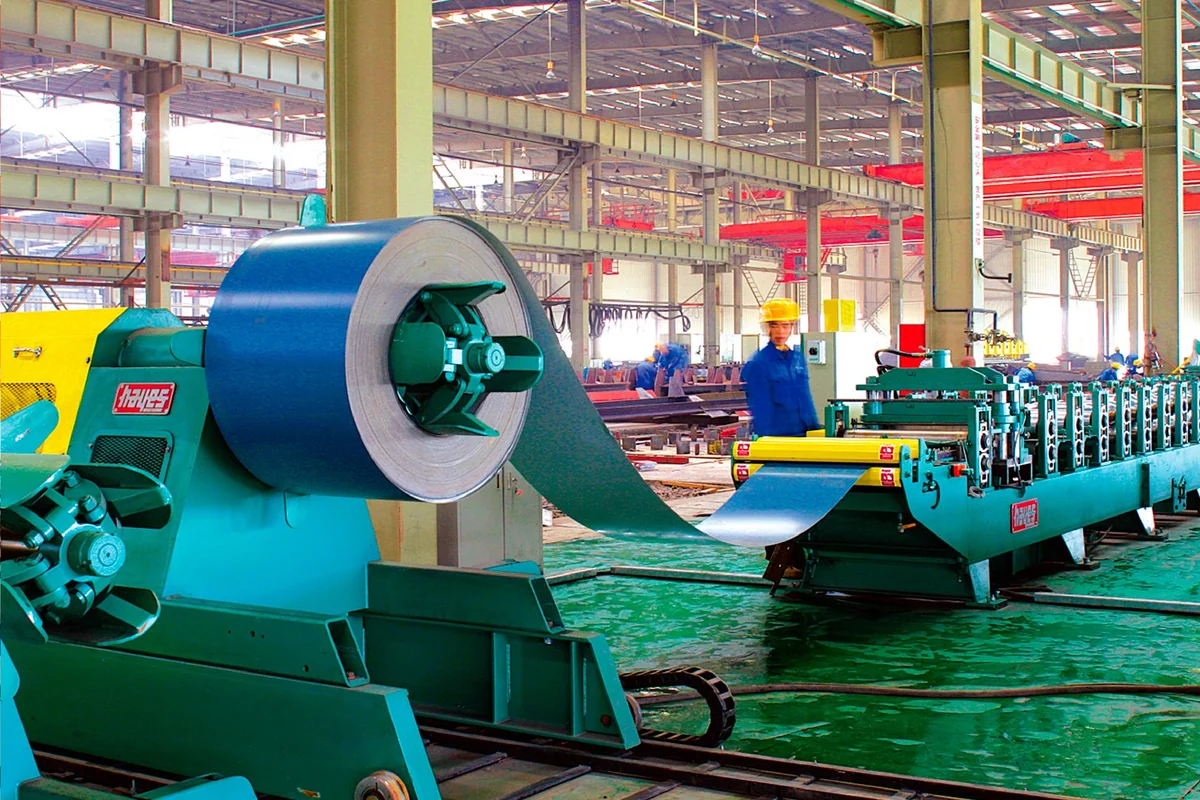
5. Flexibility: The Hidden Cost Differentiator
Businesses change; buildings that change cheaply retain value. Steel frames adapt in ways concrete frames cannot match at any price:
- Added bays and mezzanines: bolted steel connections allow future extension by adding bays or installing mezzanine floors without touching the existing frame — a common operation for logistics buildings, costing materials and labor only.
- Relocated openings and crane additions: cutting a new door opening or adding a crane runway is routine in steel; in concrete it means demolition, propping, and structural modification of reinforced members.
- Partial demolition and reconfiguration: a steel bay can be unbolted and re-erected elsewhere; concrete demolition produces waste and requires replacement pour.
- Change of use: converting a warehouse into a shop-fitted facility, or an office block into data center space, is comparably priced for services, but the structure itself responds differently — steel's lighter, stronger members make load increases (e.g., heavier plant on a roof) feasible more often.
This flexibility is difficult to price in a tender comparison, which is exactly why it is underweighted in procurement decisions. A reasonable practice is to run one scenario with an assumed 15–20% adaptation cost over the building's life and compare how each structure absorbs it.
6. Residual Value and Recycling
At the end of service, the two materials diverge sharply:
- Steel: structural steel retains measurable scrap value — typically 25–40% of the original material cost of the recovered sections, and more when sections are re-usable in used-steel markets. Roughly 90% of structural steel is recovered and recycled when buildings are dismantled, and steel is infinitely recyclable without quality loss.
- Concrete: demolition produces aggregate that is commonly crushed and reused as fill, but its recovered value is a small fraction of the original cost, and the demolition process itself is expensive. In regulated markets, concrete waste disposal and crushing add end-of-life cost rather than value.
At year 25, a building is often not demolished but refitted — in which case residual value is realized by whoever owns the building at that point, which matters for leasehold investors and holds less weight for owner-occupiers. NPV treats end-of-life residual value as a small discounted term; it rarely changes the decision alone, but it consistently favors steel in frameworks like EN 16627 that require end-of-life accounting.
7. A Worked NPV Comparison: 25-Year Horizon
To make the discussion concrete, consider a 5,000 m² logistics warehouse, frame options only, 8% discount rate, 25-year horizon. The figures below are illustrative estimates constructed from typical ranges — not quotations — and readers should substitute their own market data.
| Cost / value item (US$) | Steel frame | Concrete frame | NPV treatment |
|---|---|---|---|
| Initial frame + foundations | 385,000 | 370,000 | Full value, year 0–1 |
| Earlier occupancy revenue (2 months) | +50,000 income | 0 | Credit at year 1 (discounted) |
| Maintenance, year 10–20 | 22,000 total, years 10 & 20 | 9,000 total, year 15 | Discounted at occurrence years |
| Adaptation (2 bays added + mezzanine) | 28,000, year 12 | 61,000, year 12 | Discounted at year 12 |
| End-of-life residual value, year 25 | −33,000 (recovered value) | −3,000 (net fill value) | Credit at year 25, discounted |
| Net present value of total | ~US$331,000 | ~US$389,000 | Lower is cheaper |
In this illustrative case the steel option is roughly 15% cheaper on NPV across 25 years — mainly through earlier revenue and cheaper adaptation. Change the assumptions and the ranking changes: a low-rise apartment building with no adaptation scenario, at a remote site with cheap labor and expensive crane access, will often favor concrete. The method matters more than the conclusion: state the horizon, the discount rate, the maintenance cycles, and the adaptation assumption, and the comparison becomes auditable instead of emotional.
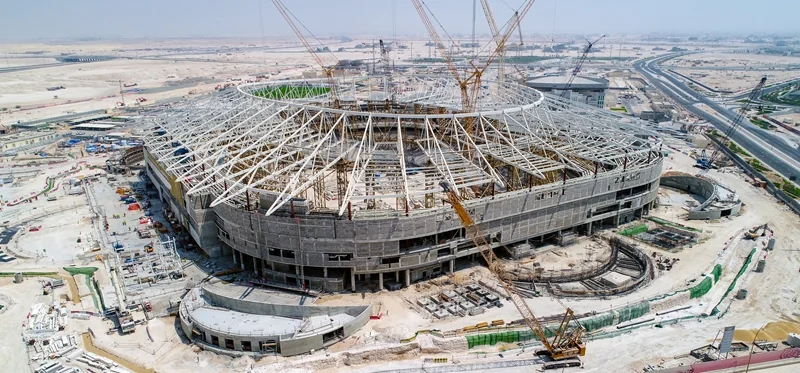
8. When Each Material Wins
- Steel wins when: spans are long (30 m+), time-to-revenue matters, the site is remote or the climate severe (steel fabricates in a controlled factory), future adaptation is likely, or end-of-life value counts — typical of logistics, manufacturing, aviation, energy, and urban redevelopment projects.
- Concrete wins when: the structure is small and highly repetitive, local formwork labor is inexpensive, fire- or acoustic-rated mass is an advantage (multi-storey residential), the environment is corrosive with low maintenance budgets, or the building is designed for a definitive, unchanging use.
- Where they are close: many mid-size industrial buildings — here schedule certainty and the buyer's tolerance for future change should decide, because the NPV gap is within estimation error.
Neither material is "better". Steel is better at being fast, flexible, light, and recoverable; concrete is better at being massive, locally sourced, and low-maintenance in benign environments. A disciplined whole-life analysis turns that engineering truth into a financial one for the specific project in front of you.
Key Takeaways
- First cost is not the decision. ISO 15686-5 whole-life costing with NPV at an explicit discount rate is the correct comparison for a capital building decision.
- Time is money. One to four months of earlier occupancy regularly offsets the entire frame-price difference for industrial buildings.
- Steel's maintenance is scheduled, concrete's is unpredictable. Coating cycles of 10–15 years (C3) are budgetable; concrete repairs are rarer but far more expensive when they occur.
- Flexibility and residual value favor steel and are systematically underweighted in tender comparisons — include an adaptation scenario in your analysis.
- The answer is project-specific. Long spans, urgent schedules, and likely change favor steel; repetitive low-rise construction with cheap local labor favors concrete.
Run your own numbers before choosing a frame material. If you would like a structured whole-life comparison for your project, our engineering team can prepare a frame option study with the cost model laid out in transparent line items. Contact our engineering team to start the analysis.
Get a Whole-Life Cost Comparison for Your Building
We prepare frame option studies comparing steel and concrete on NPV over your chosen horizon, with schedule, maintenance, and residual value made explicit. Send your building type, span, and location for a preliminary comparison.
Request a Lifecycle Analysis