
Steel Structure Logistics and Export from China: A Complete Guide
For an imported steel structure, the sea voyage is usually 10–15% of the delivered cost — but it carries 100% of the transit risk. A shipping decision made at the quotation stage can add weeks to the schedule or shave 20% off the freight bill. Yet logistics is the least understood part of the procurement process for most first-time importers, who frequently discover too late that their 24-meter roof truss cannot physically fit in a standard container.
This guide explains how fabricated steel actually travels from a Chinese factory to a foreign site: which shipping modes are available, how export packing protects the cargo, how much steel a 40-foot container will carry, which insurance and documents protect the buyer, and what the Incoterms 2020 rules really transfer when risk passes between seller and buyer. Freight rates and transit times below are typical ranges for 2025–2026 and vary with season, port congestion, and carrier schedules.

1. Choosing a Shipping Mode: Breakbulk, Container, or RoRo
Fabricated steel travels in three main ways. The right choice depends on member dimensions, total tonnage, destination port infrastructure, and schedule.
| Mode | Best suited for | Typical cargo per shipment | Key considerations |
|---|---|---|---|
| Breakbulk (conventional) | Long trusses, beams >12 m, heavy structural assemblies | 200–5,000 t per vessel | Lowest unit freight for bulk tonnage; needs crane-capable destination ports; longer berth waits |
| Container (FCL/LCL) | Plates, channels, angles, purlins, bolts, cladding, members ≤11.8 m | 20–28 t per 40HQ | Best for mixed small lots; door-to-door service; less handling damage |
| RoRo (roll-on/roll-off) | Prefabricated modules on chassis or skids, mobile buildings | 5–50 t per unit | Fast loading, gentle handling; limited route coverage in Africa |
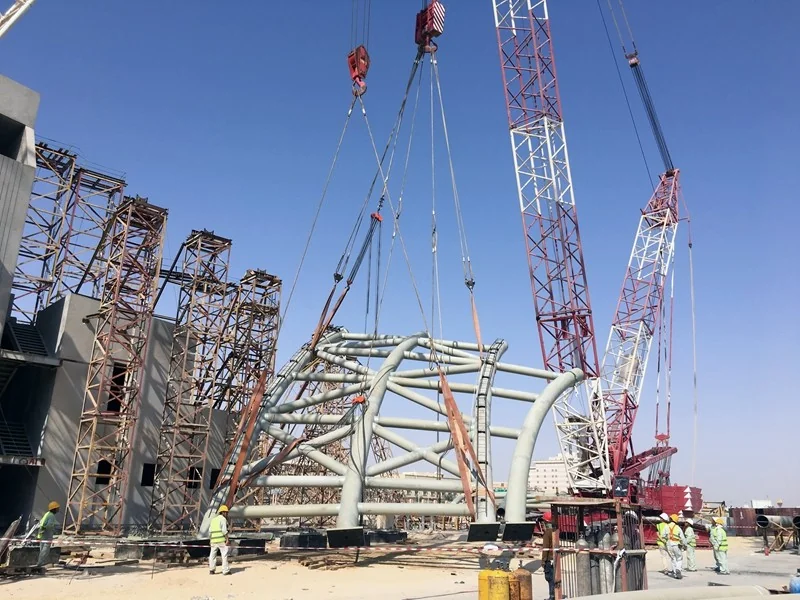
Mixed shipments are common: a warehouse package might send short members and cladding in containers while long roof trusses go breakbulk on a dedicated steel vessel. Designers can reduce freight by adding bolted splices so members fit standard container lengths — a decision best made during shop drawing review, not after fabrication.
2. Export Packing Standards: Preventing Damage and Corrosion
Cargo damage in transit is almost always a packing failure, not a voyage failure. For fabricated steel, three risks dominate: corrosion from humidity, deformation from shifting, and lifting damage at transshipment ports. Responsible export packing addresses each:
- Moisture protection. Steel is typically oiled or coated at the factory; for sea freight, members are wrapped in VCI (volatile corrosion inhibitor) paper or plastic sheeting with desiccant sachets. The marine atmosphere at 60–85% relative humidity is the most aggressive environment coated steel will see.
- Anti-deformation bracing. Long members are lashed to steel-framed skids or timber cradles with steel strapping, preventing bending under stacking loads in the hold or container. Connection plates and bolts travel in airtight crates, not loose in the container.
- Lifting and lashing points. On site cranes and at ports, crews lift from wherever looks convenient. Packing must mark designated lifting points and provide spreader bars for long bundles; omitted lifting points are a frequent source of bent flanges.
- Labeling and packing lists. Every bundle carries a waterproof label matching the packing list reference; without this, site crews cannot identify members during erection and schedule slips.
Wooden crates and skids should use ISPM-15 heat-treated or fumigated timber, stamped for international compliance; otherwise the packing itself can be rejected at destination customs.
3. Container Loading: Practical Limits for a 40HQ
A 40-foot high-cube container (40HQ) has typical internal dimensions of approximately 12.03 m × 2.35 m × 2.69 m, a payload limit around 26,500–28,000 kg depending on the carrier and axle rules, and a usable volume of roughly 76 m³. Steel is weight-limited, not volume-limited — you will hit payload long before the box is full. Practical loadings for common cargo types:
| Cargo type | Typical piece weight | Practical load per 40HQ | Loading notes |
|---|---|---|---|
| Steel plates (6–20 mm) | 1–3 t per bundle | 22–26 t, flat packed and lashed | Keep plate bundles level; never exceed axle limits |
| Hot-rolled sections (H/UB/UC) | 1–4 t per bundle | 20–26 t | Nest flanges to minimize voids; use timber dunnage |
| Fabricated columns/beams ≤11.8 m | 0.5–2.5 t per piece | 14–22 t | Cargo shifting during transit is the main risk; brace each end |
| Purlins, girts, bracing (C/Z sections) | Loose bundles | 22–26 t in strapped bundles | Bundle lengths ≤5.9 m to load two rows end-to-end |
Flat-rack and open-deck containers extend practical member length to about 12.5 m, at higher freight and with weather exposure. Members beyond 12.5 m belong on breakbulk vessels. Before quoting freight, a competent supplier produces a container loading plan — if the supplier cannot show one, the freight estimate is a guess.
4. Insurance and Incoterms 2020: Who Bears What
Marine insurance for steel is normally placed under Institute Cargo Clauses (A) — "ICC(A)" — which provides all-risk cover for physical loss or damage from external causes, excluding war, strikes, inherent vice, and delay. For fabricated steel, ICC(A) is the standard buyers should insist on; the cheaper ICC(C) covers only major casualties and leaves partial damage from mishandling uninsured.
Incoterms 2020 defines delivery points and, critically, where risk transfers. The three terms you will see most in steel quotations:
- FOB (Free on Board, named port of shipment) — the seller delivers the cargo on board the vessel at the export port and clears export customs. Risk and cost pass to the buyer at the ship's rail (in practice, when cargo is on board). The buyer arranges ocean freight and insurance, so shipping costs are transparent but the buyer manages the carrier.
- CIF (Cost, Insurance, Freight, named port of destination) — the seller covers the sea freight and buys ICC(A) insurance, but risk still passes to the buyer once the cargo is on board the vessel. A CIF price is not "delivered"; if cargo is damaged at sea, the buyer claims from the seller's insurer. CIF suits buyers who want a single price including the voyage.
- DDP (Delivered Duty Paid, named place of destination) — the seller carries risk and cost through import clearance, duty payment, and delivery to the site. Maximum convenience, but the seller must register for local tax and some countries restrict foreign entities from DDP import declaration. For steel, DDP is often priced with a risk premium or refused in markets with complex customs.
Two rules reduce surprises: (1) state the "delivery place" precisely — "FOB Shanghai" and "CIF Mombasa" are complete terms, but "CIF Nigeria" is not a valid delivery point; (2) in CIF contracts, require the insurance certificate to name your company as the loss payee or beneficiary.
5. Export Documentation: The Paper Trail That Unlocks Cargo
Steel export shipments require a standard document set. Errors here cause demurrage and customs holds far more often than physical damage does.
- Commercial invoice — states the goods, quantities, unit prices, and total; the customs value basis is the CIF or CNF value at destination.
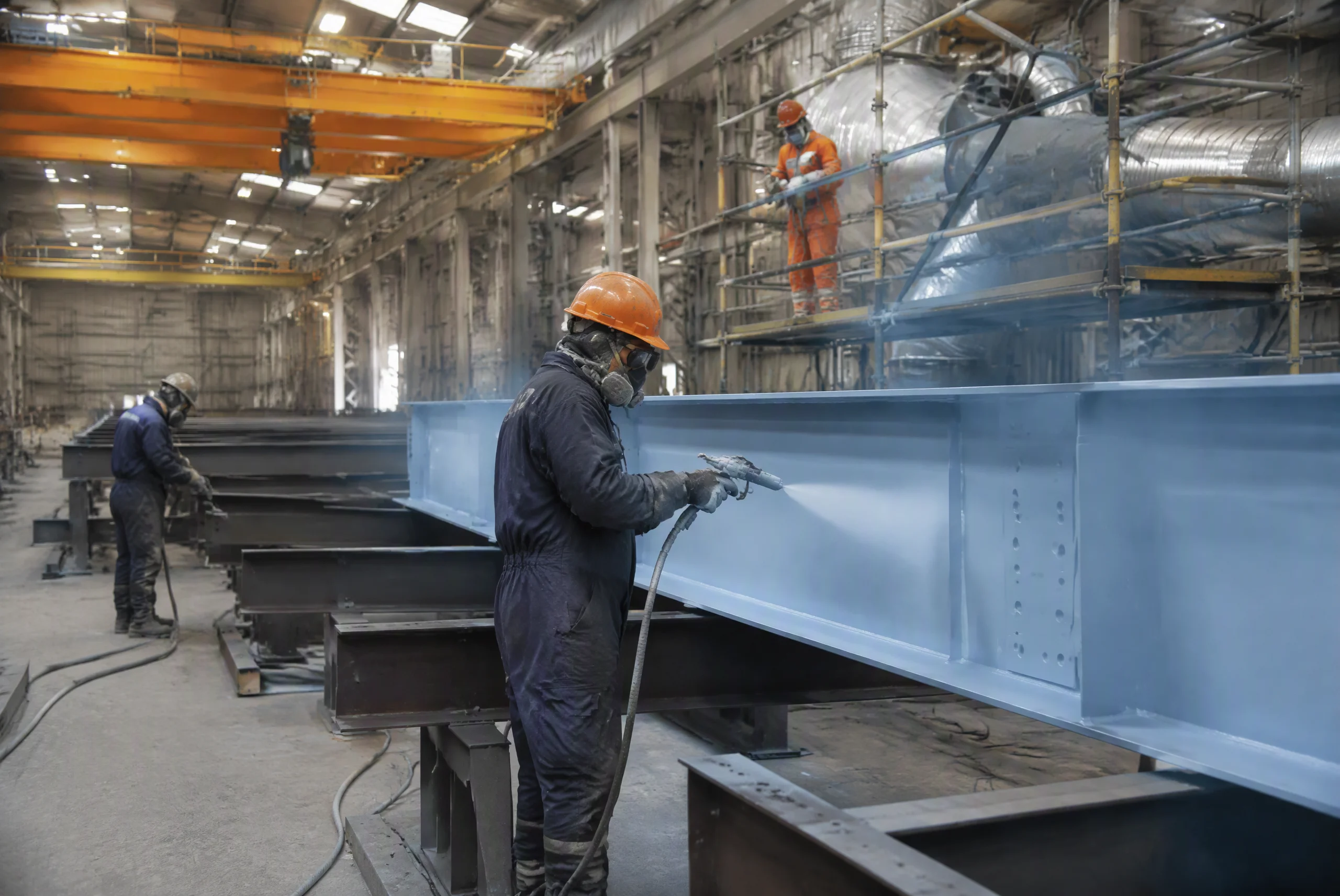
- Packing list — itemizes every package with dimensions, gross/net weight, and the label reference used on site. For erection planning, the packing list is the bridge between factory production and site assembly.
- Bill of lading — the contract of carriage and document of title. "Original" bills control delivery; a transferred original moves title to the buyer once payment (or LC negotiation) is completed.
- Certificate of origin (CO) — proves the goods' origin for customs duty assessment. The general CO is issued by the chamber of commerce; for many markets, preferential certificates reduce or waive duty.
- Form E — the China–ASEAN Free Trade Area certificate, which provides tariff preference when importing into ASEAN member states (for example, Vietnam, Thailand, Indonesia, Malaysia). It is specific to ASEAN; for Africa and the Middle East, check whether the destination has a bilateral preference arrangement — most do not, and standard duty applies.
- Supplementary certificates — typically a fumigation certificate for ISPM-15 timber, mill test certificates for steel grades, and a Certificate of Inspection if a third-party inspector was engaged.
Documentation accuracy is a contractual duty, not a goodwill gesture: an LC at sight requires "documents against payment" to comply exactly with the LC terms, and a mismatch (a wrong HS code or an off-by-one weight) can stall negotiation for days while cargo sits at the destination port.
6. Typical Transit Times from Chinese Ports
Transit times below are typical ranges from Shanghai, Qingdao, or Guangzhou for 2025–2026 liner services, excluding port congestion at destination and inland haulage. They assume direct or near-direct services; transshipment via Singapore, Port Klang, or Colombo adds 5–15 days.
| Destination region and port | Typical sea transit | Mode typically used | Inland caution |
|---|---|---|---|
| East Africa — Mombasa (Kenya) | 20–28 days | Container + breakbulk | Inland to Kampala/Kigali adds 8–15 days |
| West Africa — Lagos (Nigeria), Tema (Ghana) | 30–45 days | Container dominant | Apapa congestion; pre-clear documents |
| Southern Africa — Durban (South Africa), Luanda (Angola) | 25–35 days | Breakbulk common (Luanda) | Luanda lighterage may add 2–4 weeks |
| Middle East — Jeddah, Dubai (Jebel Ali) | 15–22 days | Container + RoRo | Fast clearance; high berth rates |
| Southeast Asia — Laem Chabang, Ho Chi Minh, Singapore | 5–12 days | Container | Form E preference check for ASEAN |
Plan the schedule from the destination backward: add 3–7 days for port discharge and customs, 2–10 days for inland haulage, and a 1–2 week contingency for congestion. A realistic total from factory gate to site start is usually 6–12 weeks, and buyers who compress this number without contract protection simply inherit the risk.
Key Takeaways
- Match the mode to the member. Short members and cladding travel by container; long trusses and heavy assemblies go breakbulk; modules use RoRo where routes exist.
- Packing prevents most transit damage. VCI wrapping, anti-deformation bracing, ISPM-15 timber, and marked lifting points are standard, not optional, for sea freight.
- A 40HQ is weight-limited for steel — plan 20–26 t per container, and demand a container loading plan before accepting a freight estimate.
- Insure under ICC(A) and understand Incoterms. CIF is not delivery, DDP carries real customs risk, and FOB leaves the carrier to you.
- Documents unlock cargo. The packing list, CO, and (for ASEAN) Form E must match the invoice exactly or the cargo waits at the port.
Planning an import from China? Provide your member sizes, total tonnage, and destination port, and our export desk will return a shipping recommendation with mode, packing standard, documentation list, and a realistic schedule. Contact our logistics engineering team or see how we structure our supply and installation services on export projects.
Export-Ready Steel, Delivered on a Realistic Schedule
We combine fabrication, export packing, and freight planning in one scope, so the logistics assumptions are fixed before the steel is cut. Share your project details to receive a freight-inclusive quotation and schedule.
Plan Your Shipment With Us