Republic of Congo Airport Steel Structure
An international export project delivering 1,200 tonnes of steel structure and enclosure works for an airport facility in the Republic of Congo. Four continuous spans with a maximum span of 43 meters and total span of 172.75 meters — fabricated in China, shipped across two oceans, and assembled on a tropical African construction site.
Exporting Steel Structure Engineering to Africa
The Republic of Congo Airport project is a representative example of Permanent Steel's international export capability: designing, fabricating, shipping, and providing on-site technical support for a complete steel structure and enclosure package delivered to a construction site in Central Africa.
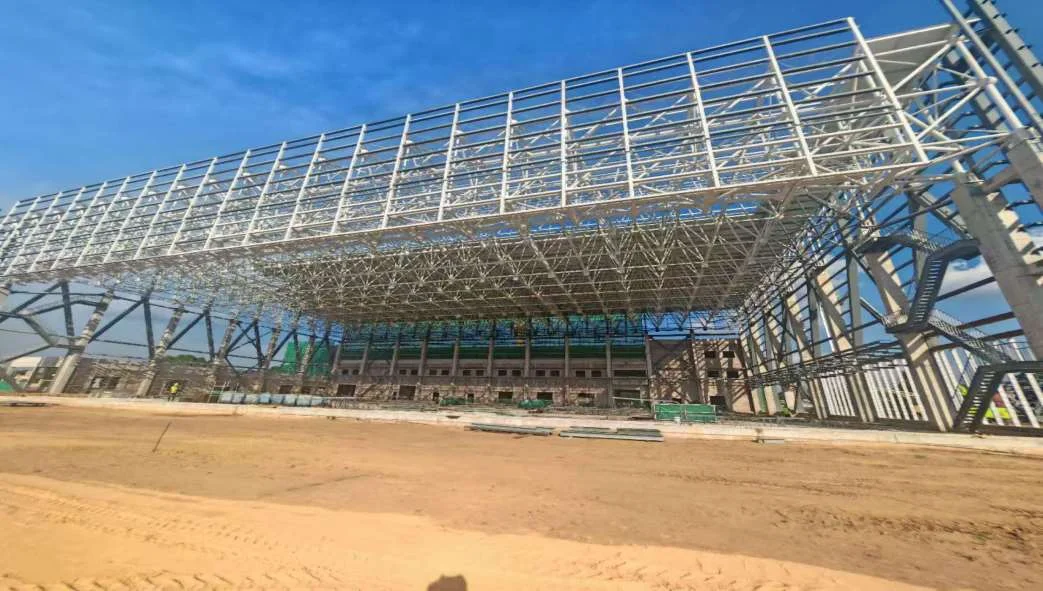
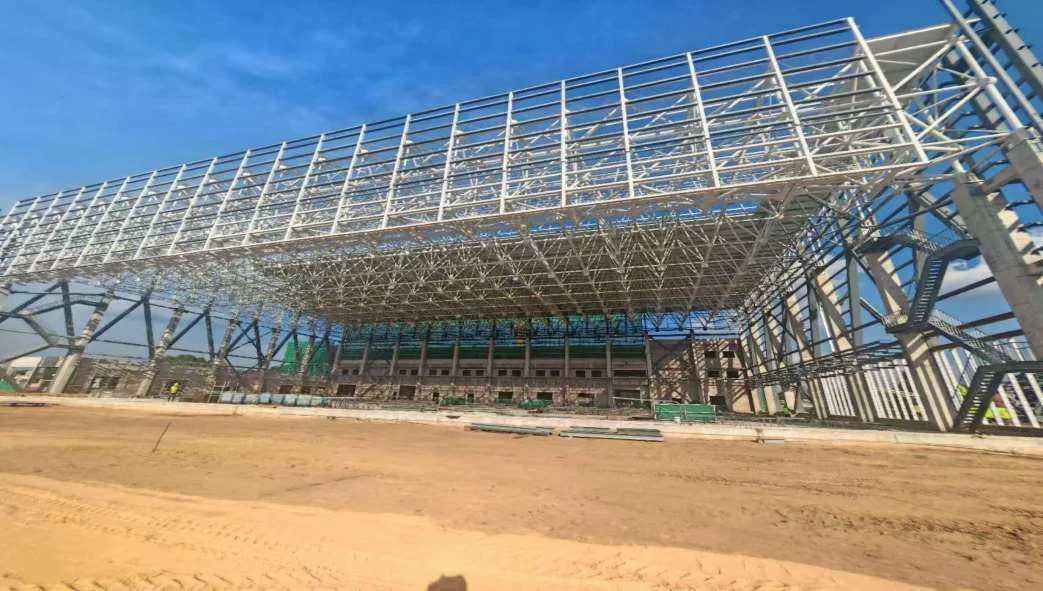
The project scope encompassed steel structure fabrication and enclosure works for a 5,200 m² airport facility. The structural system comprises four continuous spans, with the widest span measuring 43 meters and the total accumulated span reaching 172.75 meters. The total steel weight was 1,200 tonnes — a quantity that required careful planning of shipping containers, port handling, and inland transport to the remote site.
This project is significant for several reasons. First, it demonstrates Permanent Steel's ability to deliver complete steel structure packages — not just fabricated steel members, but the full enclosure system including wall panels, roof cladding, doors, and windows — to international destinations. The "steel structure and enclosure works" scope means that we provided a weather-tight, functionally complete building envelope, not merely a structural frame.
Second, the project was delivered to a tropical climate zone with environmental conditions fundamentally different from those in our Xuzhou fabrication facility. The Republic of Congo, located in Central Africa astride the equator, experiences tropical conditions including high ambient temperatures (30-35°C average), extreme humidity (80-95% RH during wet seasons), intense UV radiation, and heavy seasonal rainfall. These conditions impose specific requirements on material selection, corrosion protection, and enclosure system design that are not typical of temperate-zone projects.
Third, the project represents Permanent Steel's contribution to African infrastructure development. Aviation infrastructure is critical for economic development in landlocked or under-served regions; a functioning airport facilitates trade, enables emergency medical evacuation, and connects remote populations to national and international networks. The steel structure we fabricated supports a facility that serves these essential functions.
Scope of Supply
The complete delivery package included:
- Structural steel frame: 1,200 tonnes of fabricated steel including primary columns, roof beams, bracing systems, and secondary framing members
- Roof enclosure system: Metal roof panels, insulation, vapor barrier, ridge and gutter detailing, and roof penetrations for mechanical systems
- Wall enclosure system: Insulated wall panels, window frames, door frames, and wall-to-roof junction detailing
- Connection hardware: All bolts, nuts, washers, anchor bolts, and connection plates required for field assembly
- Protective coating system: Factory-applied corrosion protection system appropriate for the tropical marine-adjacent environment
- Erection drawings and technical support: Detailed assembly drawings, marking plans, and on-site technical advisory services to support the local construction team
Tropical Climate and Export Logistics
1. Tropical Corrosion Environment
The Republic of Congo's tropical climate creates one of the most aggressive atmospheric corrosion environments for steel structures. The combination of high temperature, high humidity, and seasonal rainfall produces conditions where steel corrosion rates can be 5-10 times higher than in temperate, dry climates. The corrosion mechanism is electrochemical: moisture film on the steel surface, continuously replenished by high humidity and condensation, acts as the electrolyte; the steel provides the anode and cathode; and atmospheric oxygen (abundant in a hot, humid environment) drives the reaction.
Standard coating systems designed for temperate climates may fail rapidly in tropical conditions. The failure mechanisms include:
- Blistering: Moisture vapor penetrates the coating and condenses at the coating-steel interface, causing the coating to lift from the substrate
- UV degradation: Intense tropical sunlight breaks down organic coating binders, reducing coating flexibility and adhesion over time
- Thermal cycling: Daily temperature swings of 15-20°C in a high-humidity environment cause cyclic expansion and contraction of the coating, accelerating micro-cracking
- Fungal and biological growth: In tropical climates, organic coatings can support biological growth that further degrades the protective barrier
2. Multi-Span Steel Structure Design
The four-span continuous structure presents specific engineering challenges distinct from single-span buildings. In a continuous multi-span beam system, the moments at the interior supports are negative (tension on top, compression on bottom) — the opposite of the mid-span moment distribution. This means that the beam cross-section must be designed to handle both positive and negative bending, with the compression flange alternating between top and bottom depending on location along the beam.
The maximum span of 43 meters is substantial — well beyond the range of simple hot-rolled beams. This span was achieved using built-up welded sections or truss-type members, where the member depth provides the lever arm between tension and compression chords, reducing the required steel tonnage per square meter of floor area. The continuous beam action across multiple spans reduces the maximum moment compared to simply-supported spans of the same length — a structural efficiency that the design exploited to minimize steel weight.
The 172.75 m total span across four bays creates a long, slender building. Lateral load resistance (wind and seismic, if applicable) had to be provided by braced frames or moment frames in both the longitudinal and transverse directions. The bracing layout had to be coordinated with the functional requirements of the airport facility — bracing systems that interrupt door openings or circulation paths are unacceptable in an operational building.
3. Export Shipping and Logistics
Shipping 1,200 tonnes of fabricated steel from Xuzhou, China to a construction site in the Republic of Congo involves a logistics chain of remarkable complexity:
- Inland transport (China): Trucks from our Xuzhou facility to the port of shipment (typically Shanghai or Lianyungang), with each truck carrying a container or flat-rack load of fabricated members
- Port handling (China): Container stuffing or flat-rack loading at the port, customs export clearance, and vessel loading
- Ocean shipping: Container vessel routing from China to West African ports (typically Pointe-Noire for Congo-bound cargo), a voyage of 30-45 days
- Port handling (Congo): Customs import clearance, container unloading, and inland transport to the site
- Site receiving: Material unloading, inventory verification, and storage before erection
At every transfer point, there is risk of damage, loss, or delay. The fabrication and packaging strategy had to minimize these risks:
- Container-friendly member sizes: Member lengths and weights designed to fit within standard 40-foot container dimensions, minimizing the need for flat-rack or break-bulk shipping
- Protective packaging: Steel members wrapped in vapor-corrosion-inhibitor (VCI) paper and sealed in moisture-barrier wrapping to prevent corrosion during the ocean voyage
- Shipping mark identification: Every package marked with unique identifiers matching the erection drawings, enabling the site team to locate specific members in the shipment without unpacking the entire consignment
- Spare parts provision: Critical fasteners and small components supplied with a 5-10% surplus to account for loss during shipping and handling
4. Quality Control Across 15,000 km
When the fabrication facility and the construction site are separated by 15,000 km and a 45-day shipping delay, quality issues that would be routine in a domestic project become major problems. A non-conforming member discovered on-site cannot be returned to the factory for rework; the replacement shipment takes months. This places extraordinary importance on pre-shipment quality verification.
Our approach was to apply 100% inspection — not statistical sampling — to all critical fabrication parameters before shipment. Every member was checked for dimensional accuracy, weld quality, coating integrity, and marking identification. Photographs and inspection records of every member were compiled into a pre-shipment documentation package that was sent to the client for approval before the vessel sailed. This documentation ensured that the client had confidence in what was being shipped and could plan the erection sequence knowing that every member would fit as designed.
Tropical-Grade Design and Delivery
Tropical Corrosion Protection System
The coating system was specified for tropical atmospheric corrosivity category C4 (high corrosivity, per ISO 12944), appropriate for an outdoor structure in a humid tropical climate. The system comprised:
- Surface preparation: Abrasive blast cleaning to Sa 2.5 (near-white metal), achieving a surface profile of 50-85 µm roughness for optimal coating adhesion
- Primer: Zinc-rich epoxy primer at 50-75 µm DFT, providing galvanic (cathodic) protection of the steel substrate at coating damage locations
- Intermediate coat: High-build epoxy intermediate coat at 125-175 µm DFT, providing barrier protection and film build
- Topcoat: Aliphatic polyurethane topcoat at 50-75 µm DFT, providing UV resistance and color stability — essential in the intense tropical sunlight
- Total DFT: 225-325 µm — substantially heavier than the 120-180 µm typical of temperate-climate industrial buildings
The polyurethane topcoat was selected specifically for its UV resistance. Aliphatic polyurethanes resist the photochemical degradation that breaks down the binder in lower-grade coatings, maintaining coating flexibility and adhesion for 15-20 years in tropical conditions. This is the same coating technology used on offshore oil platforms and tropical-climate bridges — applications where recoating is operationally difficult and coating failure is not an option.
Continuous Multi-Span Structural Optimization
The structural design exploited the efficiency of continuous beam action across the four spans. In a simply-supported beam, the maximum bending moment is wL²/8, where w is the load per unit length and L is the span. In a continuous beam over multiple supports, the maximum moment is reduced to approximately wL²/12 to wL²/10 depending on the number of spans and the relative span lengths — a reduction of 20-37% in the governing moment. This reduction translates directly into reduced member sizes and steel tonnage.
The continuity was achieved through moment-resisting connections at the interior supports — connections that can transfer bending moment from the beam to the column through bolted or welded end-plate joints. These connections are more complex than simple shear connections, requiring carefully designed end plates, high-strength bolts, and stiffeners to prevent local flange or web yielding. However, the steel tonnage savings across a 172.75 m structure with 1,200 tonnes total weight are substantial — on the order of 100-150 tonnes compared to a simply-supported alternative.
Enclosure System Design for Tropical Conditions
The enclosure works — roof and wall panels, doors, windows — were specified for tropical performance:
- Roof panels: Insulated metal roof panels with a thermal break between the outer skin and the inner skin, preventing conductive heat gain through the roof — a critical concern in tropical buildings where solar gain on a metal roof can produce interior surface temperatures exceeding 60°C without insulation
- Wall panels: Insulated wall panels with tongue-and-groove joint profiles that shed wind-driven rain rather than allowing water penetration through the joint — essential in tropical rainfall events that can produce 100+ mm/hour precipitation rates
- Vapor barrier: Continuous vapor barrier on the exterior side of the insulation, preventing humid tropical air from penetrating the wall assembly and condensing on cooler interior surfaces
- Fasteners: Stainless steel fasteners for all exterior panel connections, preventing galvanic corrosion between fastener and panel in the moisture-rich environment
Erection Support and Technical Advisory
The erection of the steel structure was performed by the local construction team in the Republic of Congo, with Permanent Steel providing technical advisory services. Our erection engineers traveled to the site to support the initial assembly, verifying that:
- The foundation anchor bolts matched the column base plate hole pattern (verified before any steel erection began)
- The erection sequence followed the planned order, ensuring structural stability at every stage of partial construction
- Bolted connections were properly torqued to the specified values, using calibrated torque wrenches
- The structural geometry was maintained within tolerance throughout erection, with survey verification of column plumbness and beam levelness
- The enclosure system was installed in the correct sequence: roof first (for weather protection), then walls, then doors and windows
This on-site advisory service is a standard component of our international export projects. We do not merely ship steel and leave; we provide the technical support required to ensure that the structure is assembled correctly, regardless of the experience level of the local construction team. This is part of our full-service delivery model — the same accountability that we apply to domestic projects, extended across international borders.
Building Africa's Aviation Future
The Republic of Congo Airport project demonstrated Permanent Steel's capability to deliver complete, tropical-grade steel structure and enclosure packages to African construction sites — a capability that is increasingly relevant as African nations invest in aviation, industrial, and public infrastructure to support economic growth.
The project also validated our export quality management system. The 100% pre-shipment inspection protocol developed for this project has become our standard for all international projects, ensuring that every member arriving at a distant site meets specification — because the cost of a non-conforming member on a remote site is not measured in the member's replacement cost, but in the weeks or months of project delay while a replacement is fabricated and shipped.
For the Republic of Congo, the airport facility supports the country's transportation infrastructure, enabling passenger and cargo operations that connect the national economy to regional and international networks. The steel structure fabricated in Xuzhou now stands in Central Africa — a physical connection between Chinese manufacturing capability and African development needs.
Systems Used in This Project
 Structure
Multi-Span Steel Frame
Continuous beam structural system with 4 spans and moment-resisting connections. Optimized steel tonnage through continuous action.
 Enclosure
Tropical Enclosure System
Insulated metal panels with vapor barrier and stainless fasteners. Designed for high-humidity, high-UV tropical climate performance.
 Export
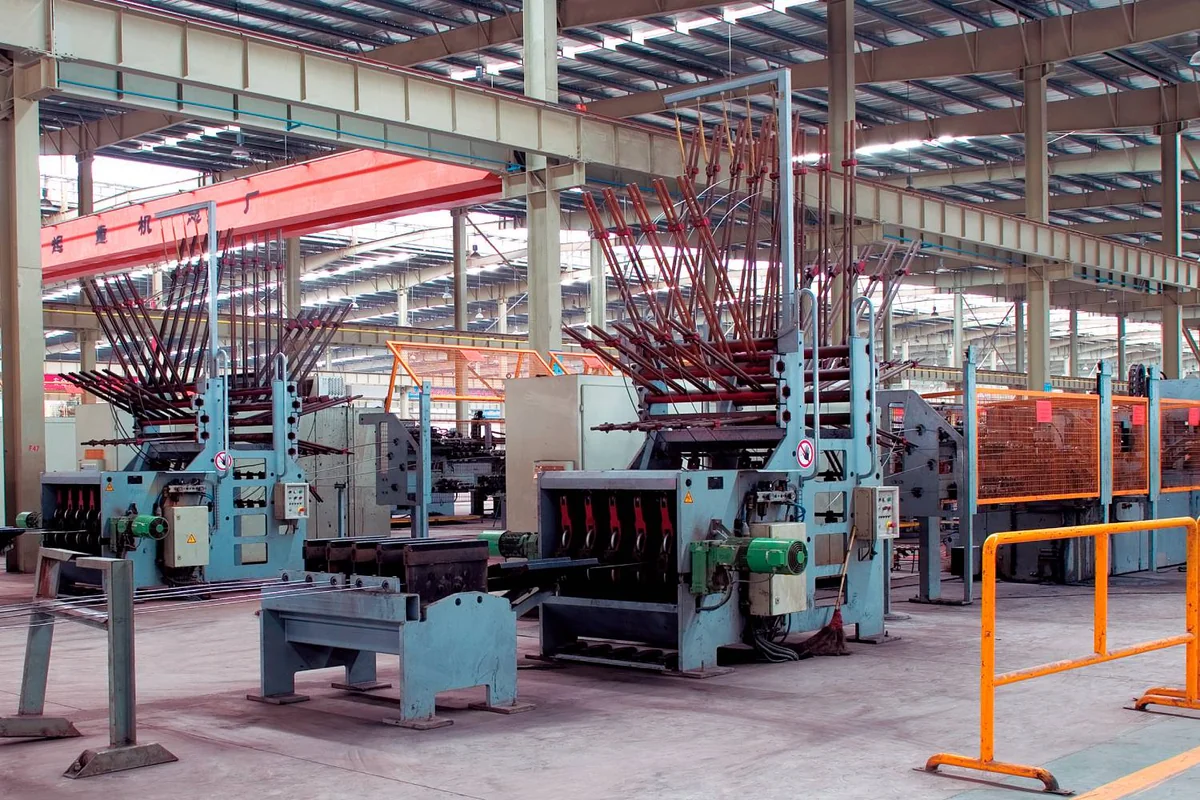
 Steel Components
Container-optimized member sizes, VCI packaging, and 100% pre-shipment inspection. Complete export logistics management.
International Steel Structure Project?
From tropical Africa to polar Antarctica, from the Middle East to Southeast Asia, our export delivery system handles fabrication, packaging, shipping, and on-site technical support. Contact us to discuss your international steel structure requirements.
Request Export Consultation