
Steel Structures in Africa: A Buyer's Guide to the Regional Market
Africa is one of the fastest-growing markets for imported structural steel, yet it is also one of the most misunderstood. Infrastructure investment across the continent has grown steadily, driven by logistics corridors, mineral processing, agribusiness, affordable housing, and a manufacturing push in several economies. But almost all of the steel consumed must be imported — local steel capacity is concentrated in a handful of countries and covers only part of the demand for fabricated structures.
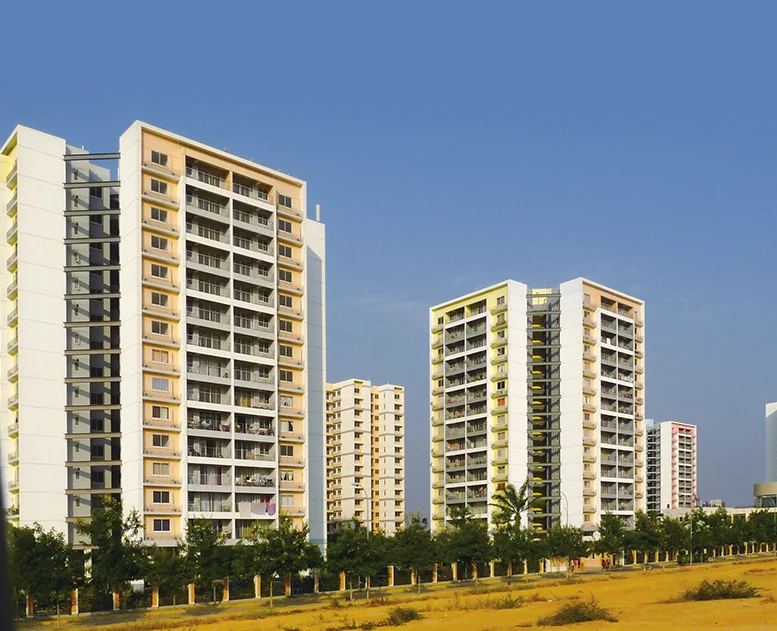
Buying steel structures for an African project is different from buying for Europe, the Middle East, or Southeast Asia. Design codes vary by colonial and regulatory heritage, customs regimes differ sharply between markets, payment risk is a practical concern, and the logistics chain — from a Chinese port to an inland African site — can take 30 to 70 days. This guide outlines what buyers need to know, market by market, based on our experience supplying projects across the continent, including affordable housing in Angola and the Republic of the Congo airport terminal.
1. Demand Drivers in Six Key Markets
Structural steel demand in Africa is not uniform. The following is a snapshot of the drivers and constraints in the six markets we see most often in export enquiries. Demand figures are estimates and should be read as direction, not precision.
| Country | Infrastructure drivers | Code basis (typical) | Routes for imported steel |
|---|---|---|---|
| South Africa | Mining, renewables, logistics hubs; mature local fabrication base | SANS 10162, EN 1993 accepted | Durban, Cape Town, Port Elizabeth |
| Kenya | Port of Mombasa expansion, railway corridors, warehousing, data centers | BS 5950 legacy, EN 1993 adoption | Mombasa (main gateway for East Africa) |
| Nigeria | Urbanization, factories, airports, oil & gas support facilities | BS/Eurocode mixed | Lagos (Apapa, Lekki), Onne |
| Ghana | Port expansion, agro-processing, affordable housing, gold mining support | BS 5950 legacy, EN 1993 adoption | Tema, Takoradi |
| Angola | Post-war rebuilding, housing programs, oil sector facilities | Eurocode referenced in national projects | Luanda, Lobito |
| Egypt | New cities, industrial zones, logistics, renewable energy | Egyptian code (ECP 205), EN basis | Alexandria, Damietta, Sokhna |
Two patterns stand out. East and West African logistics warehousing is growing with port upgrades, which favors clear-span portal frame buildings. Southern and Central Africa, by contrast, favor project steel tied to mining and industrial refurbishment, where fabricated units and specialized members carry a larger share of demand.
2. Design Codes and Specification Preferences
Most African markets inherited British standards and are in transition to the Eurocode family. In practice, that means:
- East Africa and West Africa commonly accept designs to BS 5950 or EN 1993-1-1, with wind loading per local meteorological data. Some national bodies require structural computation to the Eurocode even where older buildings used BS.
- South Africa uses SANS 10162 (based on the Canadian S16 tradition) for hot-rolled steel design; EN 1993 is increasingly accepted for imported structures, and SANS 10163 for cold-formed sections.
- Egypt applies the Egyptian Code for Steel Structures (ECP 205), which aligns closely with Eurocode provisions.
- Chinese GB standards (GB 50017 design, GB/T 1591 material grades) are frequently acceptable when a chartered engineer registered locally signs off the import, but buyers should confirm acceptance before fabrication — re-design after manufacture is the most expensive mistake in this market.
Our experience: confirmation of the applicable code and the need for local engineer certification should be a pre-contract item, not a discovery at customs or plan approval. We routinely issue design computations in both Chinese (GB) and Eurocode formats so local engineers can review familiar documentation.
3. Import Clearance and Duty Differences
Customs treatment of prefabricated steel buildings varies widely. The duty figures below are typical estimates for 2025–2026 and must be verified with a licensed customs broker for each shipment; rates change with trade agreements and fiscal policy.
- Kenya and the EAC apply the East African Community Common External Tariff. Prefabricated buildings and structural steel typically attract import duty in the range of 10–25%, plus 16% VAT, with project-specific exemptions sometimes available for government-backed infrastructure.
- Nigeria applies duties in the range of 5–20% depending on the HS heading (prefabricated buildings and structures are commonly 5–10%), plus a 7.5% VAT introduced in 2020. Port demurrage at Apapa is a notorious cost if documentation is late — complete commercial documents matter more here than in almost any other market.
- Ghana applies duties typically in the range of 5–20% plus VAT and a national health insurance levy. Tema port handling for breakbulk steel is well established.
- Angola duties on steel structures are generally moderate by regional standards, but the documentation burden (electronics invoice matching, importer registration) is heavy; working with an experienced clearing agent is essential.
- Egypt applies duties in the range of 10–30% for structural steel depending on classification, plus VAT; the investment framework for the new administrative capital and industrial zones can reduce the effective cost for licensed manufacturers.
- South Africa applies duties typically under 10% for most steel structure imports, plus VAT, and enforces strict conformity requirements (letter of authority, standards compliance).
The practical rule for buyers: ask the supplier for a complete HS-code-level classification with each quotation, and budget 5–15% of the CIF value for duties and port charges depending on the country. Never assume the price quoted ex-works tells you what the building will cost on site.
4. Payment Methods: What Works in Practice
Payment risk shapes both pricing and willingness to supply. In most African markets, the workable structures are:
- 30% advance + 70% letter of credit (LC at sight) — the most common structure for larger projects. The advance covers material procurement; the LC at sight covers the balance against shipping documents. LC confirmation by a third bank adds margin but transfers payment risk to the confirming bank.
- 100% LC at sight — common when the buyer is a government agency or a prime contractor; suppliers price slightly lower risk into the quotation when payment is secured by a confirming bank.
- Telegraphic transfer (TT) milestones — used for small or repeat orders: typically 30% before fabrication, 40% at fabrication completion, 20% against shipped documents, 10% after arrival or erection. For repeat clients with a track record this works well; for a first order it signals risk and prices accordingly.
- Payment against documents (DP/D/A) — occasionally accepted for small urgent orders, but uncommon in structural steel due to the value at stake.
The Kenya and Tanzania experience shows that projects funded by multilateral institutions are the most predictable for suppliers and buyers alike, because the funding structure forces proper LC discipline. For private developers, we recommend an agreed milestone schedule in the contract, tied to verifiable inspection reports rather than calendar dates alone.
5. Logistics: Ports, Congestion, and the Last Mile
Ocean freight from Chinese ports to East Africa typically takes 20–30 days to Mombasa; to West African ports (Lagos, Tema) 30–45 days; to Luanda and Durban 25–40 days. The sea leg is predictable; what is not is port congestion and inland transit:
- Mombasa is the gateway for Kenya, Uganda, Rwanda, and parts of South Sudan and DRC. Transit to Nairobi is short, but inland haulage to Kampala or Kigali adds 8–15 days and significant trucking cost.
- Lagos (Apapa/Lekki) handles the majority of Nigeria's steel imports. Containerized cargo clears faster than breakbulk at Lagos; pre-cleared documentation is essential to avoid import demurrage.
- Tema serves Ghana and the landlocked markets of Burkina Faso, Mali, and Niger. Clearance at Tema is comparatively efficient, but inland transport distances are long.
- Luanda is the entry for Angola; breakbulk steel typically requires lighterage or dedicated berth scheduling, so lead time planning of 2–4 weeks beyond the sea leg is realistic.
- Durban handles southern Africa imports efficiently; the rail line north is unreliable, so road haulage to Gauteng is the norm.
Design for logistics: members longer than 12 m generally cannot travel in a 40-foot container and switch to breakbulk or flat-rack, which changes both cost and schedule. Shipping mode selection, packing standards, and transit planning deserve a dedicated study before fabrication begins — we cover the essentials of container loading and Incoterms in our export logistics guidance for every quotation we issue.
6. Our Experience on the Ground
We have supplied steel structures for two representative African programs. Because clients and end users prefer confidentiality, we describe only the projects we are authorized to name:
- Angola affordable housing program — steel-framed residential buildings delivered to Luanda under a government housing initiative, covering frame supply, fabrication documentation, and technical erection support. Angola projects typically needed design adaptation to Eurocode-based wind loading and hot-humid corrosion environments (ISO 12944 C4 or C5).
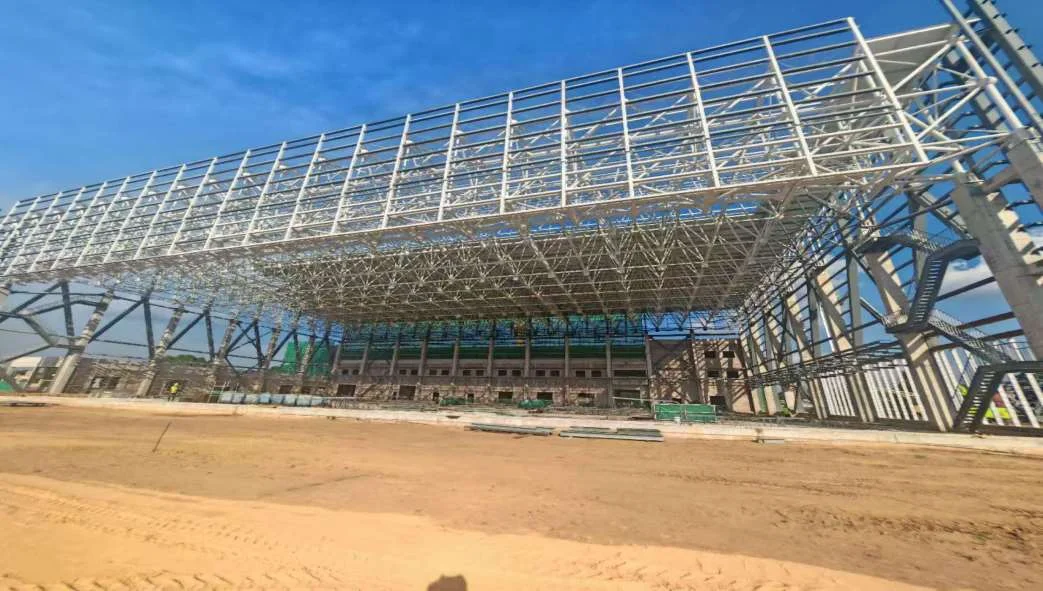
- Airport of the Republic of the Congo — a large-span steel roof structure for an airport terminal in Brazzaville, demonstrating the pipe-truss and spatial grid systems we supply across West and Central Africa. Long members were shipped breakbulk to Pointe-Noire and trucked inland.
Both projects reinforced the same lesson: the differences between African markets are real, but manageable when code, customs, payment, and logistics are defined in the contract before fabrication begins. See our African project portfolio for more detail.
7. Country Procurement Checklist
| Procurement item | Recommended approach | Common failure without it | Lead time impact |
|---|---|---|---|
| Code and engineer of record | Confirm code + local certification need pre-contract | Plan-approval rework or re-design after fabrication | +3–8 weeks |
| HS classification and duties | Get broker quotation with CIF landed-cost estimate | Budget overrun; cargo held at customs | +1–4 weeks |
| Payment instrument | 30% advance + LC, or milestone TT for repeat flow | Supplier premium for risk; stalled production | +0–2 weeks |
| Port routing and mode | Containerize short members; breakbulk long trusses | Demurrage; member damage from wrong handling | +2–6 weeks |
| Erection supervision | Supplier technical direction + local crew | Warranty disputes; construction errors | +4–8 weeks on site |
Key Takeaways
- Each African market is a different procurement environment. Code basis, duty levels, payment practice, and port logistics differ enough that a single sourcing template will mislead you somewhere.
- Confirm the design code before fabrication. BS/Eurocode heritage markets accept equivalence differently; local engineer certification should be a pre-contract item.
- Budget 5–15% of CIF value for duties and port costs depending on the country, and insist on HS-level classification in your quotation.
- Structured payment protects both sides. 30% advance + 70% LC at sight is the workhorse for African projects of any size.
- Logistics, not freight, is the schedule risk. Congestion at Lagos, clearance at Luanda, and inland haulage from Mombasa and Tema matter more than the sea leg itself.
Planning a steel structure project in Africa? Tell us the country, the building type, and the design code you must satisfy — we will respond with a code-compliant concept, a landed-cost estimate, and a realistic schedule. Contact our export engineering team to start.
Supplying Steel Structures to Africa, the Right Way
From Angola housing to Congo airport terminals, we have delivered code-compliant, customs-savvy steel projects across the continent. Share your country and building requirements for a landed-cost preliminary quotation within 24 hours.
Start Your African Project