
Buying Steel Structures from China for Australia
Australian buyers import fabricated steel into a regime built on AS 4100 design, AS/NZS 5131 fabrication and state-adopted NCC compliance — plus biosecurity checks by the Department of Agriculture, Fisheries and Forestry at the border. This guide lays out the standards to specify, the indicative cost components and a realistic timeline from Shanghai to Melbourne, Sydney or Brisbane.
The Australian Code Framework Your Fabricator Must Meet
Australian steel construction is driven by the standards your engineer writes into the specification: AS 4100 for design, AS/NZS 5131 for fabrication and erection, AS/NZS 1554.1 for welding and AS/NZS 3678/3679.1 for materials. If these are not fixed in writing before quoting, many Chinese fabricators will quietly work to GB 50017. Specify the documents below in your enquiry.
| Document | Scope | Key Requirement for Imported Steel |
|---|---|---|
| AS 4100 | Design of steel structures | Limit-state design of members and connections; shop drawings and connection design are reviewed by the engineer of record. |
| AS/NZS 5131 | Fabrication & erection of steel structures | The engineer assigns an execution category; C-class regular industrial structures need documented WPS, qualified welders and inspection, with higher-consequence structures stepped up. |
| AS/NZS 3678 / AS/NZS 3679.1 | Structural steel plates and hot-rolled sections | Grade 350 equivalents (mapped from domestic grades) with mill certificates; confirm grade and impact test requirements on the drawings. |
| AS/NZS 1554.1 | Structural steel welding | WPS and welder qualification to AS/NZS 1554.1; visual and NDT acceptance criteria match the weld category (SP/GP). |
| AS/NZS 4680 / AS/NZS 2312 | Hot-dip galvanizing and corrosion protection | Coastal sites commonly specify galvanizing to AS/NZS 4680 or coating systems to AS/NZS 2312 for C4/C5 environments. |
How We Execute Australian-Code Projects
On Australian-bound orders we fabricate to a documented double standard: material per AS/NZS 3678/3679.1 equivalents (Grade 350, with chemistry and impact values on the certificate), welding to AS/NZS 1554.1 with WPS qualified for the specified process, and dimensional acceptance to the tolerances your engineer assigns under AS/NZS 5131. Shop drawings are issued for the engineer’s check before cutting, and a licensed Australian engineer reviews and endorses the connection design.
Our 200,000-tonne annual capacity and 6 special-grade qualifications mean a typical 400–1,500 t warehouse or factory frame is a standard production slot; a mining or logistics envelope of 2,000 t or more fits one contractual programme, drawing on more than 500 projects delivered to 40+ countries.
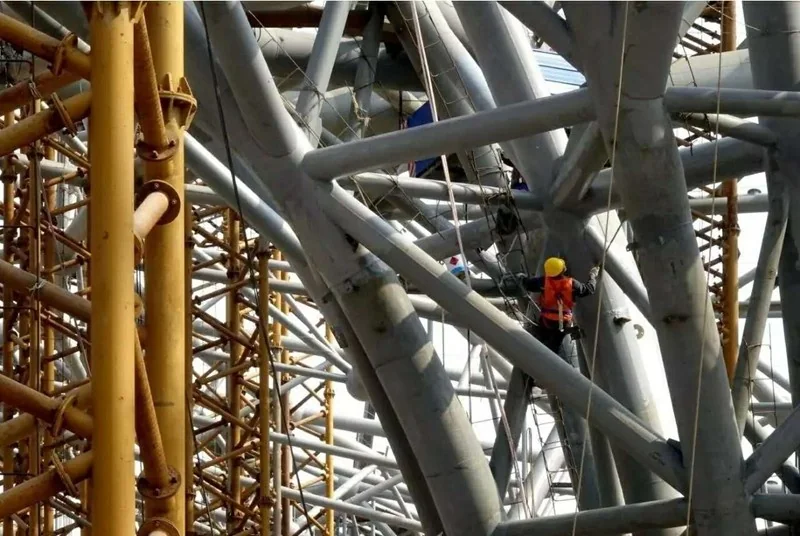
Frames Built for Australian Loads
Portal frames, grids and trusses designed and fabricated to AS 4100 with wind and seismic parameters from AS 1170 — the loading regime Australian engineers actually design to.
NCC Compliance, Biosecurity and the Border Process
Building work in Australia is regulated state by state against the National Construction Code (NCC). For industrial buildings — Classes 7 to 10 — Volume 2 sets the Deemed-to-Satisfy provisions and performance requirements your structure must meet. Design loads come from AS 1170.2 wind actions, with cyclone regions B, C and D applying along the northern and western coastlines, and AS 1170.4 earthquake actions. Your Australian engineer of record fixes these parameters on the drawings before we fabricate.
At the border, the Department of Agriculture, Fisheries and Forestry (DAFF) checks imports for biosecurity risk. Bare steel is not a quarantine risk, but timber dunnage and packing must be ISPM-15 heat-treated and marked, and containers must be clean of soil, seeds and insects — a failed inspection means treatment or re-export. We specify ISPM-15 fumigated packing as standard and photograph the container interior at loading.
Clearance runs through the Integrated Cargo System: your broker files the import declaration, DAFF issues a Direction and Permission to Deal (DPD) once the biosecurity check is complete, and the cargo is released for delivery. Allow 2–7 extra days if a container is flagged for inspection — an easy contingency to write into a construction programme.
Finally, factor the exposure zone into protection. C4/C5 atmospheres along the Queensland and Western Australian coastlines usually push specifiers to galvanizing per AS/NZS 4680 or a two-coat-plus system per AS/NZS 2312 rather than a standard shop primer. Steel itself is not affected by termites, but timber packing must be ISPM-15 treated and removed from site, and coastal corrosion protection is priced from the site postcode — tell us where the structure is going and we will protect accordingly.
Customs Duty, GST and What It Costs to Land Steelwork
Australian customs duty on fabricated steel structures (HS 7308) runs 0–5% depending on classification and origin: steel imported from China may qualify for 0% under the China–Australia Free Trade Agreement if it meets the rules of origin. Confirm with your broker before relying on it. GST at 10% is charged at import on the goods plus duty and freight, and is reclaimable if you are registered.
| Cost Component | Indicative Magnitude | Notes |
|---|---|---|
| Import duty, structural steel (HS 7308) | 0–5% (indicative) | ChAFTA origin rules may reduce eligible goods to 0%; confirm classification and rate at import. |
| GST | 10% at import | Levied on goods plus duty and freight; reclaimable by registered businesses in the next BAS. |
| Customs & DAFF clearance | Broker fee + handling | DPD issued after the biosecurity check; pre-arrival declarations speed release. |
| Ocean freight, Shanghai → Melbourne / Sydney / Brisbane | USD 40–70 per t (2026 indicative) | Fremantle and Adelaide are also served; break-bulk vs container changes the rate. |
| Port handling & delivery | Per tonne / per load | Terminal handling plus truck or rail to site; remote sites add haulage. |
The bottom line: add FOB, freight, duty (ideally 0% under ChAFTA), clearance and haulage — GST is a reclaimable cash-flow line rather than a cost for registered buyers. A typical 1,000 t portal-frame warehouse lands at roughly FOB plus USD 55–90 per tonne all-in before GST at current freight levels. On standard industrial frames the gap to domestic fabrication remains wide enough that the arithmetic usually works — provided protection, biosecurity packing and documentation are priced in from the start.
We quote FOB, CIF or DDP Australia-inclusive. Under DDP we carry duty, GST and clearance risk and you receive one invoice, with ISPM-15 compliant packing as standard.
Timeline to an Australian Site, Step by Step
A realistic worst-case schedule protects both sides. Build the milestones below into your contract so that approvals and payments cannot silently slip the shipment window.
Shop Drawing & Approval — Wk 0-4
We issue Tekla shop drawings and erection plans for your Australian engineer’s check to AS 4100. Budget 2–4 weeks; complex grids or trusses run 4–6. Revisions are version-controlled and transmitted with a record.
Material Procurement & Mill Certs — Wk 2-5
AS/NZS 3678/3679.1 Grade 350 mill certificates are collected per heat, with impact values where your specification requires. No substitution without written client approval.
Fabrication & QC — Wk 5-13
A 1,000 t frame runs 6–9 weeks under AS/NZS 5131 FPC: welder qualifications to AS/NZS 1554.1, 100% weld inspection by certified QC, NDT per category and coating per your exposure zone.
Pre-Shipment Inspection & Loading — Wk 12-14
Optional third-party witness (SGS/BV). Timber is ISPM-15 fumigated and marked; container interiors are swept and photographed before loading.
Ocean Transit — Wk 14-17
Shanghai to Melbourne, Sydney (Port Botany) or Brisbane typically 15–20 days sailing; Fremantle is served on the same liner strings. Add 2–5 days port dwell.
Customs Clearance & Delivery — Wk 17-19
Declaration lodgement, DAFF biosecurity check and DPD, then release to your logistics provider. Allow 2–7 extra days if a container is flagged; DDP routes carry that risk for us.
Projects at Australian Scale and Complexity
The pattern below — column-free grids, airport-scale roofs and long-span energy envelopes — is what we ask an Australian buyer to evaluate before the first call.

Column-Free Logistics & Events
Bolted-sphere space grids give Australian warehouses and sports facilities clear spans without internal columns — a structural system we fabricate routinely at 200,000 t annual capacity.
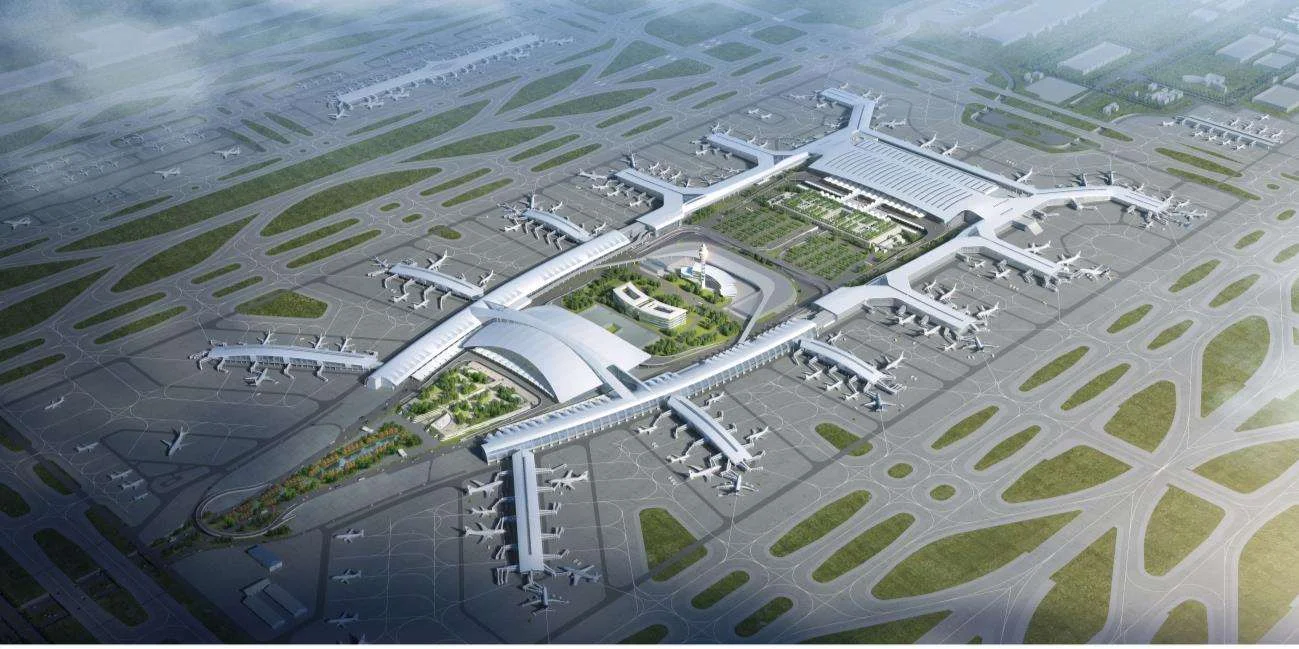
450,000 m² Airport Roof
Guangzhou Baiyun Phase III: 42,000 t of steel in one terminal programme — the scale and QC discipline airport and major public projects demand.
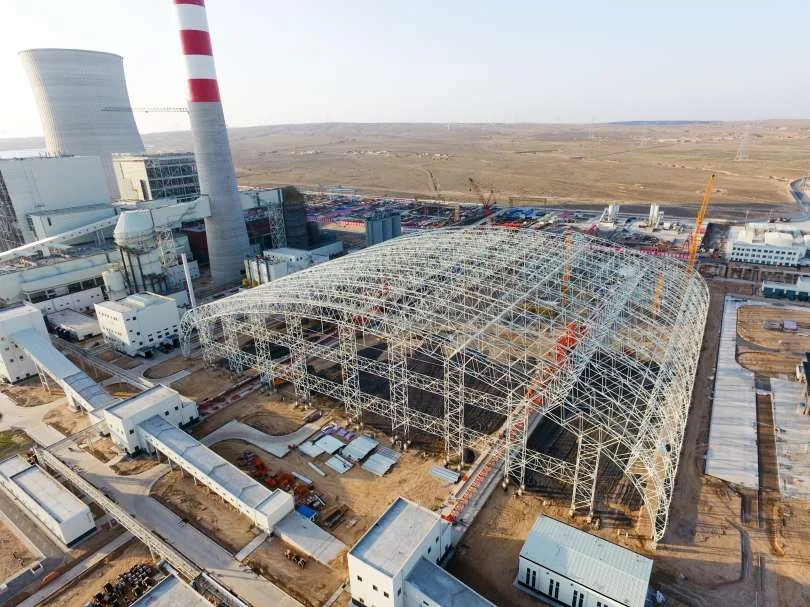
229 m World-Record Shed
The longest prestressed beam-string coal shed in the world by span — extreme wind and deflection control, directly analogous to Australian mining and energy envelopes.
Australian Buyer Questions, Answered
Do you fabricate to AS 4100 and AS/NZS 5131 for Australian projects?
Yes. We design and check to AS 4100, fabricate under AS/NZS 5131 with the execution category your engineer assigns, qualify welders to AS/NZS 1554.1 and issue shop drawings for the engineer’s endorsement. Independent witness inspection is available before loading.
What does DAFF biosecurity clearance involve for steel?
Bare steel is not a quarantine risk. The checklist is: ISPM-15-treated and marked timber packing, clean container interiors (no soil, seeds or insects) and a correct import declaration — then DAFF issues a DPD and the cargo is released. We handle the packing side; your broker handles the declaration.
Who handles Australian customs and GST?
Your importer of record (you or your broker) files the import declaration and pays duty and GST. We quote FOB or CIF by default; DDP is available on Australian routes through our logistics partners — one fixed landed price including clearance.
What is the realistic total lead time?
Plan 17–19 weeks from approved drawings to an east-coast port, and roughly 19–22 weeks to site, on a standard 1,000 t programme — including fabrication, 15–20 days of sea transit and biosecurity clearance.
Get an Australia-Specific Quotation
Send your drawings and site location and we will return: AS 4100-compliant design notes, FOB/CIF/DDP pricing, a duty and GST estimate including DAFF considerations, and a binding fabrication schedule.
Request a Quotation Talk to an Engineer