Buying Steel Structures from China for Germany
Germany enforces EN 1090-1 and EN 1090-2 through mandatory CE marking, executes designs to DIN EN 1993 with the German National Annex, and expects welder and coordinator certificates that match the project’s execution class. This guide covers the conformity file to request, the indicative cost components and a realistic timeline from Shanghai to Hamburg or Bremerhaven.
The European Framework German Projects Enforce
Unlike markets where compliance is a written option, EN 1090-1 makes CE marking mandatory for structural steel components placed on the EU market, and EN 1090-2 sets the execution requirements. German clients then layer on DIN EN 1993 design, strict personnel qualifications and, very often, third-party witness inspection. If your fabricator does not name an execution class and a conformity route in the quotation, the quotation is incomplete.
| Document | Scope | Key Requirement for Imported Steel |
|---|---|---|
| EN 1090-1 / EN 1090-2 | CE conformity and execution of steel structures | Factory production control and a DoP per EN 1090-1; execution class EXC2 or EXC3 fixed by the planner, with matching welder and NDT evidence. |
| DIN EN 1993 (Eurocode 3) + German NA | Design of steel structures | Member and connection checks to Eurocode 3 with German National Annex parameters (DIN EN 1993-1-1/NA); structural class per project. |
| EN ISO 9606-1 / EN ISO 14731 / ISO 3834 | Personnel and welding management | Welder certificates (Schweißerprüfung) per EN ISO 9606-1, welding coordinators per EN ISO 14731 and quality management per ISO 3834 are checked on site. |
| EN 10025-2 (S235 / S275 / S355) | Structural steel material grades | Mill certificates to EN 10204 3.1 per heat with chemistry and impact values; S355JR/J0 is the common frame grade. |
| EN ISO 12944 / EN ISO 1461 | Corrosion protection of steel | Coating systems to EN ISO 12944 for C2–C5 environments or galvanizing to EN ISO 1461; fire protection to DIN 4102 / EN 13501-1 where specified. |
How We Execute German-Code Projects
On German-bound orders we fabricate to EN 1090-2 and build the conformity file during production: EN 10204 3.1 material certificates, WPS with procedural qualification records, welder registers to EN ISO 9606-1, NDT reports tied to positions, coating logs and packing lists that identify every mark. Shop drawings are issued for your engineer’s check before steel is cut.
Our 200,000-tonne annual capacity and 6 special-grade qualifications mean a typical 400–1,500 t industrial hall is a standard production slot. The Frankfurt AirRail project on German soil — executed to these codes with tight urban logistics — is the reference we put in front of German buyers first. It sits alongside more than 500 projects delivered to 40+ countries.

Components That Travel Well
Members cut, drilled, welded and coated to EN 1090-2 tolerances, marked per the packing list — so the steel and the paperwork reach the site together.
CE Marking, TÜV Inspection and German Documentation Discipline
EN 1090-1 is the harmonised standard that makes CE marking mandatory for structural steel components in Germany. The manufacturer issues a Declaration of Performance and maintains factory production control, and the planner fixes the execution class on the drawings — most industrial buildings run EXC2, while structures with higher consequences or seismic design go to EXC3. Your fabricator’s conformity file should name the execution class explicitly; a quotation that omits it is not comparable.
German buyers frequently ask for a third-party witness inspection — TÜV, SGS or another accredited agency — before shipment. Treat that as a standard line item on German-bound orders: we schedule the witness visit into production, hold the tested lots and issue a release report. NDT personnel should hold certificates per EN ISO 9712 and welders per EN ISO 9606-1; the inspector checks the certificates, not an assertion of capability.
Documentation discipline is the real differentiator on German projects: 3.1 material certificates per heat, WPS records, welder registers, NDT reports, coating logs and packing lists that identify every mark. German clients and their Abnahme (acceptance) process expect this paperwork to arrive with the steel, not after. We assemble the document set during production and hand it over at shipment.
EU Common Tariff, EORI and Landed Cost
Imports into Germany fall under the EU’s Common Customs Tariff and are declared through German customs (ATLAS). The importer needs an EORI number valid in the EU, and 19% import VAT is charged at clearance — reclaimable for registered businesses. The figures below are planning guidance and should be confirmed at the time of import.
| Cost Component | Indicative Magnitude | Notes |
|---|---|---|
| EU import duty, structural steel (HS 7308) | 2.7% (indicative) | Common external tariff; confirm the classification with your customs agent at import. |
| Import VAT (Umsatzsteuer) | 19% | Payable at clearance; reclaimable by VAT-registered buyers through the German procedure. |
| EORI number & clearance | Registration + broker fee | The German importer holds an EORI; a broker files the entry through ATLAS. |
| Ocean freight, Shanghai → Hamburg / Bremerhaven | USD 65–95 per t (2026 indicative) | Rates move with bulk and container markets; Hamburg and Bremerhaven handle most project cargo. |
| Terminal handling & inland delivery | Per tonne / per load | Hamburg’s rail connections serve the German hinterland; barge and truck options exist. |
The bottom line: land everything through one door and add it up left to right — FOB price, freight per tonne, duty, clearance charges and inland delivery; VAT is a reclaimable cash-flow line. A typical 1,000 t industrial hall lands at roughly FOB plus USD 85–120 per tonne all-in before VAT at current freight and duty levels. On standard halls the gap to German fabrication remains real, but it is the conformity file and the paperwork — not the tonne price — that decide whether the project runs smoothly.
We quote FOB, CIF or DDP Germany-inclusive. Under DDP we carry duty, VAT and clearance risk, and hand over the complete conformity file at delivery.
Timeline to a German Site, Step by Step
A realistic worst-case schedule protects both sides. Build the milestones below into your contract so that approvals and payments cannot silently slip the shipment window.
Shop Drawing & Approval — Wk 0-4
We issue Tekla shop drawings and erection plans for your engineer’s check to DIN EN 1993. Budget 2–4 weeks; complex grids or trusses run 4–6. Revisions are version-controlled and transmitted with a record.
Material Procurement & Mill Certs — Wk 2-5
EN 10025-2 mill certificates to EN 10204 3.1 are collected per heat, with impact values checked against your specification. No substitution without written client approval.
Fabrication & QC — Wk 5-13
A 1,000 t hall runs 6–9 weeks under EN 1090-2 FPC: welder certificates to EN ISO 9606-1, NDT per the execution class, fit-up tolerances per class and coating per EN ISO 12944.
Pre-Shipment Inspection & Loading — Wk 12-14
TÜV/SGS witness visit scheduled into production; timber ISPM-15 fumigated; steel bundled, edge-protected and marked per the packing list.
Ocean Transit — Wk 14-19
Shanghai or Qingdao to Hamburg or Bremerhaven typically 30–35 days sailing; Antwerp or Rotterdam transhipment adds 1–2 days. Add 3–7 days port dwell.
Customs Clearance & Delivery — Wk 19-21
ATLAS declaration via your broker or our DDP partner; duty and VAT settled; haulage or rail delivery to site on a schedule agreed before loading.
Projects at German Scale and Complexity
The pattern below includes steelwork executed to European codes on German soil — the most relevant evidence is the first card.
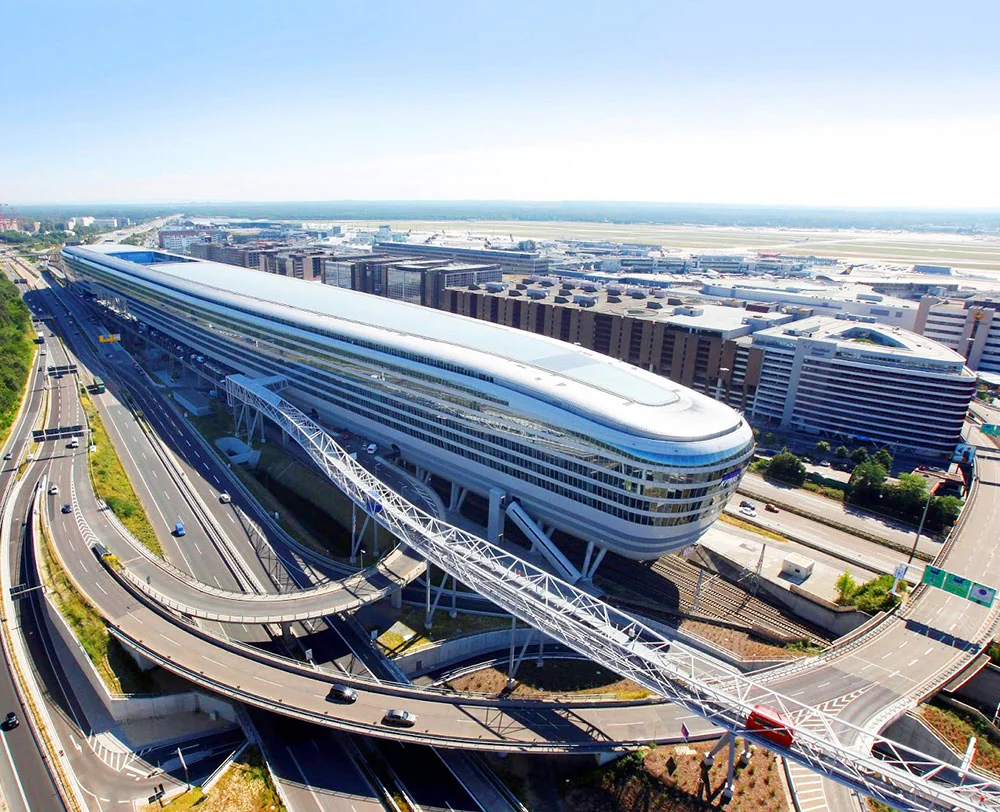
Frankfurt AirRail Center
Structural steelwork for the Frankfurt AirRail center — European-code execution, tight urban logistics and airport-grade tolerances, delivered on German soil.
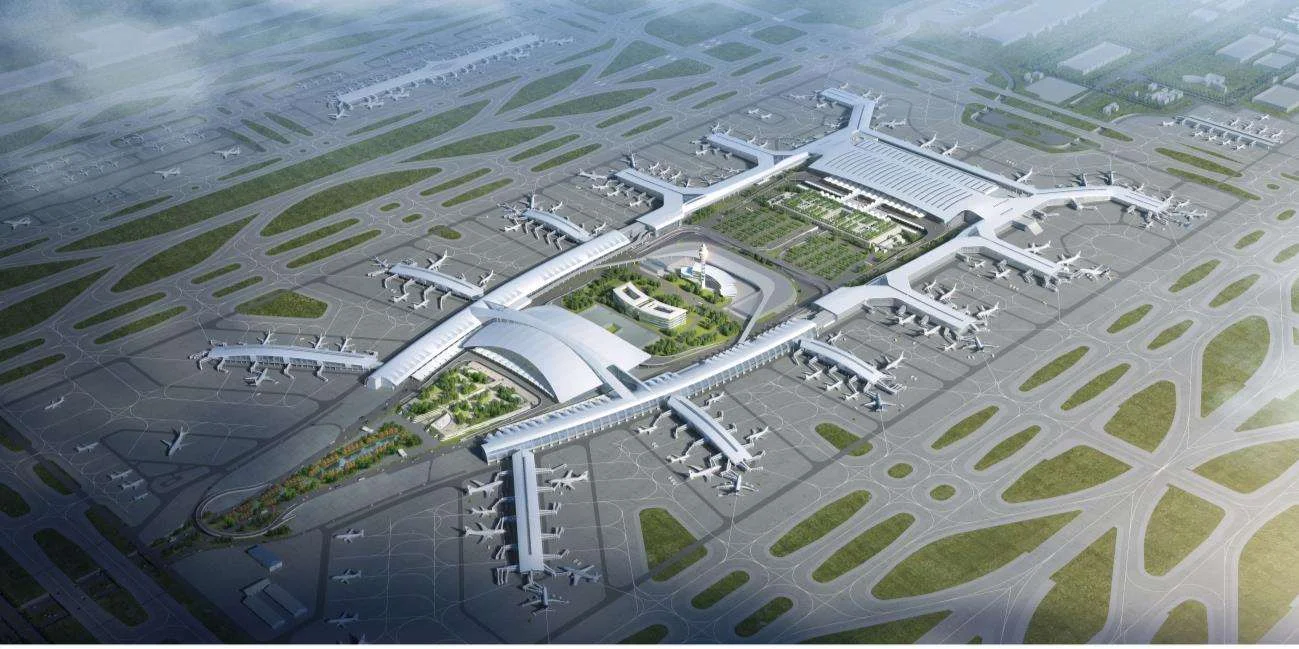
450,000 m² Airport Roof
Guangzhou Baiyun Phase III: 42,000 t of steel in one terminal programme — proof that major aviation envelopes fit one disciplined supply chain.
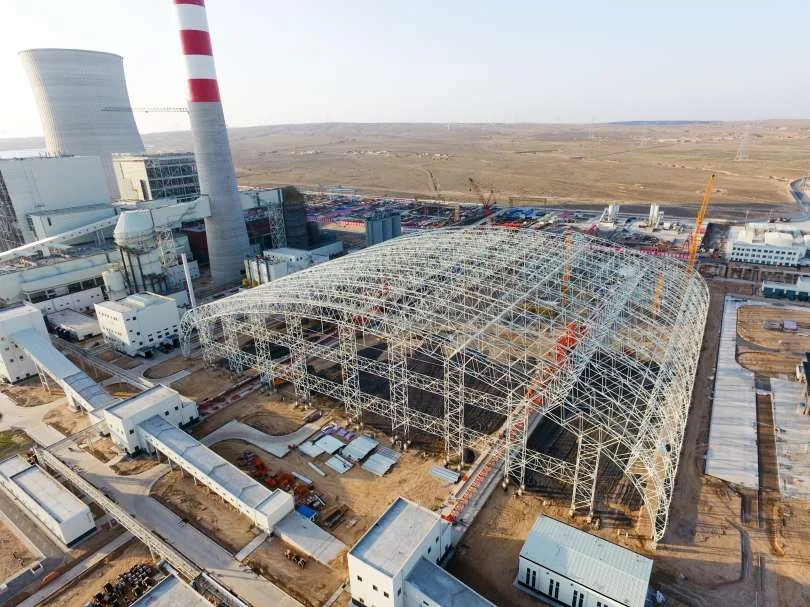
229 m World-Record Shed
The longest prestressed beam-string coal shed in the world by span — extreme wind and deflection control, the same engineering physics German energy envelopes face.
German Buyer Questions, Answered
Can you deliver the full EN 1090 conformity file?
Yes. We work to EN 1090-2 with an explicit execution class (EXC2 or EXC3), maintain factory production control, and hand over the DoP, EN 10204 3.1 material certificates, welder certificates to EN ISO 9606-1, NDT reports and coating logs with the shipment.
Will you accept a TÜV or SGS witness inspection?
Yes — on German-bound orders we treat it as standard. We schedule the witness visit into the production programme and issue inspection records before loading; the accredited inspector is welcome to review WPS, welder registers and NDT personnel certificates on site.
Who handles the EORI number and customs clearance?
The German importer holds the EORI number; your customs agent or our DDP partner files the entry through ATLAS. We quote FOB or CIF by default, and DDP Germany with one fixed landed price is available.
What is the realistic total lead time?
Plan 19–21 weeks from approved drawings to Hamburg or Bremerhaven, and roughly 21–23 weeks to site, on a standard 1,000 t programme — including fabrication, 30–35 days of sea transit and clearance.
Get a Germany-Specific Quotation
Send your drawings and site location and we will return: EN 1090-2 conformity notes with execution class, FOB/CIF/DDP pricing, an EU duty and VAT estimate and a binding fabrication schedule.
Request a Quotation Talk to an Engineer