
Buying Steel Structures from China for India
India has a strong domestic steel fabrication industry, so import only makes sense where it genuinely wins: specialised long-span systems such as bolted-sphere space grids and large trusses, or programmes where domestic shop capacity cannot hold the schedule. This guide covers the IS standards your supplier must work to, the BIS certification questions, the duty and GST model, and how to plan a shipment into Nhava Sheva, Mundra or Chennai without surprises.
Which Indian Codes Your Fabricator Must Meet
Indian steel construction is governed by Bureau of Indian Standards documents, led by IS 800:2007 for the design of steel structures and IS 2062 for structural steel material. Your consultant will check imported shop drawings against these, so the contract must state them explicitly — otherwise a Chinese fabricator defaults to GB 50017, and the re-design cost lands on you.
| Document | Scope | Key Requirement for Imported Steel |
|---|---|---|
| IS 800:2007 | Design of steel structures — general building steel | Member, connection and stability checks per IS 800:2007, reviewed by your Indian consultant before shop drawings are released. |
| IS 2062 | Structural steel material (hot-rolled plates, sections) | Mill certificates must map imported chemistry to IS 2062 grades (e.g. E250, E350) with yield values, so consultants can accept them without rework. |
| IS 875 (Part 3) | Wind loads | Wind cases must follow IS 875 Part 3 with the site's basic wind speed and terrain category. |
| IS 1893 | Seismic design criteria | Seismic zone and importance factor per IS 1893 must be incorporated into the analysis, especially for public buildings. |
| Welding per project specification | Structural welding qualification and inspection | Confirm in the contract whether acceptance is AWS D1.1 or an equivalent Indian-recognised code; welder certificates must be readable by your QA. |
How We Execute India-Code Projects
On India-bound orders we design to IS 800:2007 with wind and seismic loads per IS 875 Part 3 and IS 1893, and map material to IS 2062 grades with complete mill certificates per heat. Welding acceptance is fixed in the contract — AWS D1.1 by default, or the code your QA specifies. Shop drawings go to your consultant; independent witness inspection is available before loading.
Where import genuinely earns its place is the long-span envelope: bolted-sphere space grids and large pipe trusses for stadiums, airport terminals and industrial halls, where Indian domestic shops often lack either the jig capacity or the schedule window. That is exactly the product family our Xuzhou plant runs year-round.

Long-Span Grids for Stadiums and Terminals
Bolted-sphere space grids and pipe trusses give Indian clients column-free spans up to 100 metres and more, with node and member checks to IS 800:2007.
BIS Certification: What Applies to Imported Steel
The Bureau of Indian Standards (BIS) operates mandatory certification for specific steel product categories, enforced through the Quality Control Orders for steel. Whether an imported fabricated structure triggers BIS certification depends on what the article is classified as on import — plain fabricated structural steelwork delivered as an engineered package is treated differently from standard steel products such as bars, plates and sections covered by a Quality Control Order.
How We Handle the BIS Question
The safe path is classification before quotation, not after shipment. We ask the importer's customs broker to confirm whether the NCM-equivalent HS entry and the article description place the goods under a BIS Quality Control Order. Where certification is required, BIS certification for imported steel runs through a foreign manufacturer's certification route and takes time — so it must be scheduled into the programme, not discovered at customs.
For engineered structural packages — shop drawing approval, fabrication, erection documents — the heavy lift is documentation quality: mill certificates mapped to IS 2062, welding records per the contract code, coating reports and loading photographs. That package lets Indian customs and QA reviewers clear the file without chasing the factory.
The Honest Case for Importing
India's steel fabrication industry is capable and price-competitive on standard portal frames and conventional trusses. Import only beats it in two clear situations: specialised systems that need dedicated production tooling (bolted-sphere grids, large-bore pipe trusses, prefabricated modular buildings), and programmes where domestic shop capacity cannot guarantee the delivery window. We say this to every Indian client in the first call — and when neither situation applies, we recommend buying domestically. When it does apply, the combination of our 200,000-tonne annual capacity and 500+ delivered projects across 40+ countries is what closes the deal on schedule and precision.
Basic Customs Duty, GST and the Landed-Cost Model
Indian import cost has three layers: basic customs duty on the CIF value, additional social welfare surcharge, and GST at 18% — with the important relief that a GST-registered importer can claim the input credit on what they pay at the border. The figures below are planning references: confirm the exact rate with your customs broker for your HS classification and the current Budget cycle.
| Cost Component | Indicative Magnitude | Notes |
|---|---|---|
| Basic Customs Duty | 10–18% depending on HS classification (planning range) | Confirm your HS entry and any applicable notification exemptions before ordering. |
| Social Welfare Surcharge | 10% of the duty amount (planning reference) | Applies to most dutiable imports; assume it in the model unless your broker confirms otherwise. |
| GST on import | 18% (standard rate) | Paid at the border as IGST; a registered importer claims it as input credit, so it is a cash-flow item, not a permanent cost. |
| Clearing & handling fees | Quoted by your customs broker | Brokerage, terminal handling and transport to site; modest relative to duty but real on staged deliveries. |
| Ocean freight, Shanghai → Nhava Sheva | USD 60–100 / t (2026 indicative) | Mundra is typically slightly cheaper and faster; Chennai serves southern sites. Break-bulk and container options differ by cargo. |
The bottom line: for a registered importer, duty plus surcharge typically adds roughly 15–25% over CIF value, and the 18% GST flows through as input credit rather than a permanent burden. That makes the landed-cost comparison against domestic fabrication surprisingly close on weight-efficient structures — which is why the system choice (grid versus conventional frame) usually decides the outcome, not the freight rate.
We quote FOB, CIF and DDP as standard, and we model the duty and GST line with our client's broker before confirming the budget. For government and PSU tenders, an LC at sight against the shipping document set is the common and workable structure.
Timeline to an Indian Site, Step by Step
The fast ocean leg is one of the reasons Indian import programmes are schedule-safe: West Coast India sits only 3–4 weeks from Shanghai. Plan 18–22 weeks from approved shop drawings to delivery, and most of the risk sits in engineering and fabrication, not the sea.
Shop Drawing & Approval — Wk 0-4
Tekla shop drawings issued to IS 800:2007 with IS 875 and IS 1893 load cases for your consultant. Budget 2–4 weeks; complex grids or trusses run 4–6.
Material Procurement & Mill Certs — Wk 2-5
Mill certificates mapped to IS 2062 grades with chemistry and yield values per heat. No substitution without written client approval.
Fabrication & QC — Wk 5-12
A 500–1,000 t grid or truss package runs 5–9 weeks: welding per the contract code, fit-up tolerances, coating to your specification for the site environment.
Pre-Shipment Inspection & Loading — Wk 11-13
Optional third-party witness at the shop. Fumigated, ISPM-15-compliant packing for timber; steel bundled and edge-protected for container or break-bulk loading.
Ocean Transit — Wk 13-17
Shanghai to Nhava Sheva (JNPT) typically 21–28 days; Mundra around 20 days; Chennai 22–26 days for southern sites. Add 2–5 days port dwell.
Customs Clearance & Delivery — Wk 17-20
Duty, surcharge and IGST settled via your broker; input credit flows to your GST account. DDP to site is available on select shipments through our logistics partners.
Long-Span Systems, Already Proven
For Indian stadium, terminal and industrial clients the relevant evidence is long-span system delivery at scale. The projects below demonstrate that capability.
Space Grid Systems
Bolted-sphere space grids fabricated and erected as column-free roofs — the system Indian stadiums, airport terminals and exhibition halls specify, delivered with node-level quality control.
Rail & Transit Envelopes
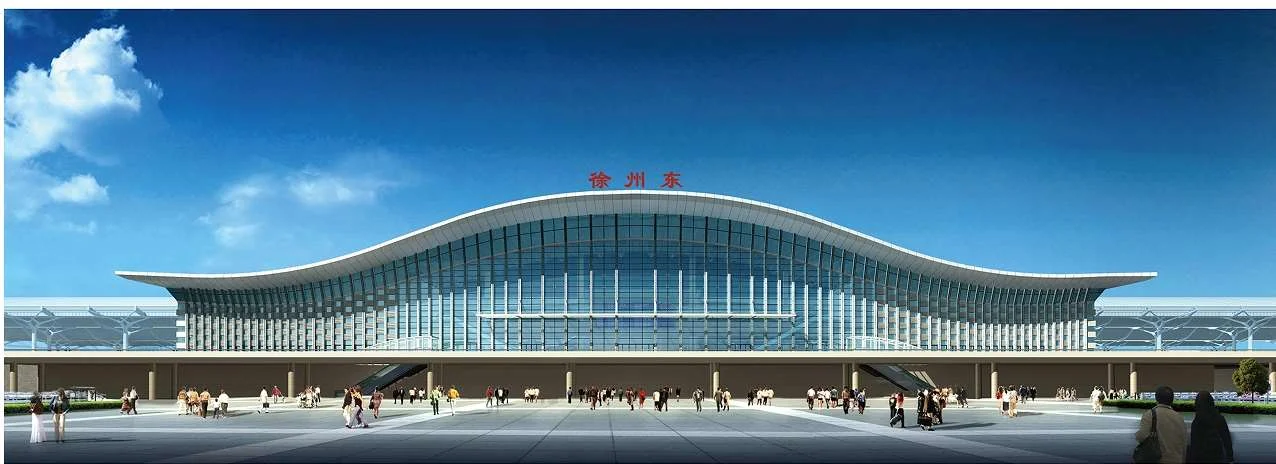
Xuzhou High-speed Railway Station — a large-span grid envelope over a busy public concourse, the same programme type as new Indian station and terminal builds.
Airport-Scale Delivery
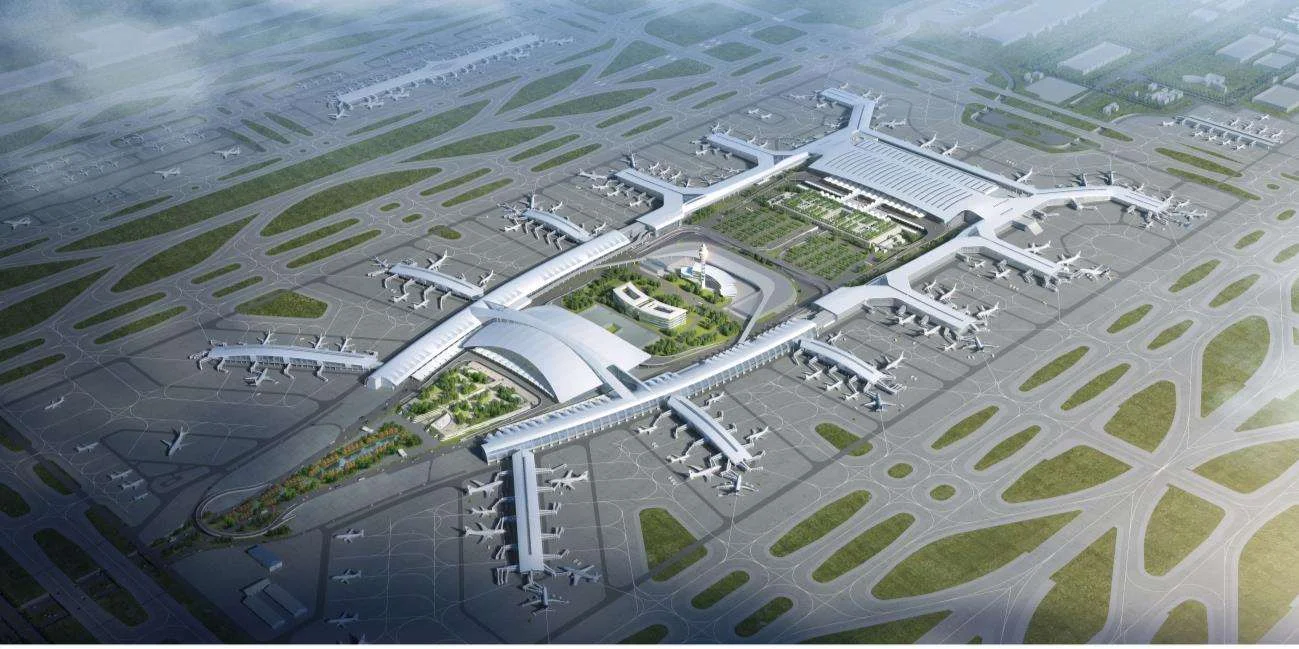
Guangzhou Baiyun Phase III: 450,000 m² and 42,000 t in one terminal programme — evidence that airport- and megaproject-scale schedules are within one supply chain.
Indian Buyer Questions, Answered
Do you design and fabricate to IS 800:2007?
Yes. We issue shop drawings checked to IS 800:2007 with wind and seismic loads per IS 875 Part 3 and IS 1893, and map material to IS 2062 grades with full mill certificates. Your consultant reviews before fabrication.
Does every steel import need BIS certification?
Only articles falling under a BIS Quality Control Order require it. We confirm your classification with your customs broker before quotation; where certification applies, it is scheduled into the programme rather than discovered at the port.
When is importing actually worth it against Indian fabrication?
Two cases: specialised long-span systems requiring dedicated tooling, and programmes where domestic shop capacity cannot hold the schedule. We say so directly — if a standard portal frame at normal lead time, buying domestically is usually the better answer.
What is the realistic total lead time?
Plan 18–22 weeks from approved drawings to delivery: about 12–14 weeks of engineering and fabrication, 3–4 weeks of ocean transit to Nhava Sheva or Mundra, and 1–3 weeks for clearance and delivery.
How does GST input credit work on my import?
IGST paid at the border at 18% is claimable as input credit by a GST-registered importer against your output liability — it is a cash-flow item in the model, not a permanent cost. Your broker files it as part of the bill of entry.
Get an India-Specific Quotation
Send your drawings and site location and we will return: IS 800:2007 design notes, FOB/CIF/DDP pricing, a modelled duty and GST estimate, and a binding fabrication schedule for your grid or truss programme.
Request a Quotation Talk to an Engineer