Buying Steel Structures from China for the UAE
UAE projects combine international design expectations with a demanding local approval chain: Dubai Municipality structural review, Civil Defence fire approvals, GCC tariffs and a hot, humid, dusty coastal climate that punishes weak corrosion protection. This guide covers the standards to specify, the approvals to plan for, and the realistic cost and schedule picture from a fabricator that has delivered across the Gulf region.
Which Codes Your UAE Fabricator Must Meet
UAE building regulations are enforced through the Dubai Building Code and project specifications, with design typically to AISC 360 or EN 1993 depending on the consultant. If your contract does not name a code, many fabricators will default to GB 50017. Put the documents below in writing before you request a quotation — they determine everything from weld inspection to coating thickness.
| Document | Scope | Key Requirement for Imported Steel |
|---|---|---|
| AISC 360-22 | Design of steel structures by LRFD or ASD | Common baseline for Gulf consultants. Member, connection and stability design follows AISC 360, reviewed by the project's UAE-licensed engineer. |
| EN 1993 (Eurocode 3) | Design of steel structures — European practice | Used on European-designed schemes in Abu Dhabi and Dubai. Execution can reference EN 1090-2 with the required execution class stated by the spec. |
| ASTM A572 / A992 | Structural steel material grades | Mill certificates must list chemistry and tensile values per heat. Q355B is mapped to A572 Gr.50 equivalents with documented chemistry. |
| ISO 12944 | Corrosion protection of steel structures | Gulf coastal exposure commonly calls for C4–C5 systems: hot-dip galvanizing plus powder coating, or zinc-rich multi-coat schemes with specified DFT. |
| AWS D1.1 / ISO 3834 | Structural welding quality | Welder qualification, WPS/PQR and inspection acceptance. Certificates must be readable and traceable to the individual welder. |
How We Execute UAE-Code Projects
On Gulf-bound orders we fabricate to a double standard: material to ASTM equivalents (Q355B mapped to A572 Gr.50 with documented chemistry), welding to AWS D1.1 with WPS qualified at our Xuzhou shop, and coating to ISO 12944 C4–C5 using hot-dip galvanizing plus powder coat or zinc-rich paint systems with third-party DFT verification. Shop drawings are issued for the client's consultant and the Dubai Municipality / Abu Dhabi approval chain. An independent agency (SGS, Bureau Veritas, TÜV) can witness weld and coating inspection before loading.
Our 200,000-tonne annual capacity and 6 special-grade qualifications mean a typical warehouse or factory frame of 400–1,500 t is a standard production slot, not a scheduling risk — a useful quality when Gulf delivery programmes are fixed by the contract.
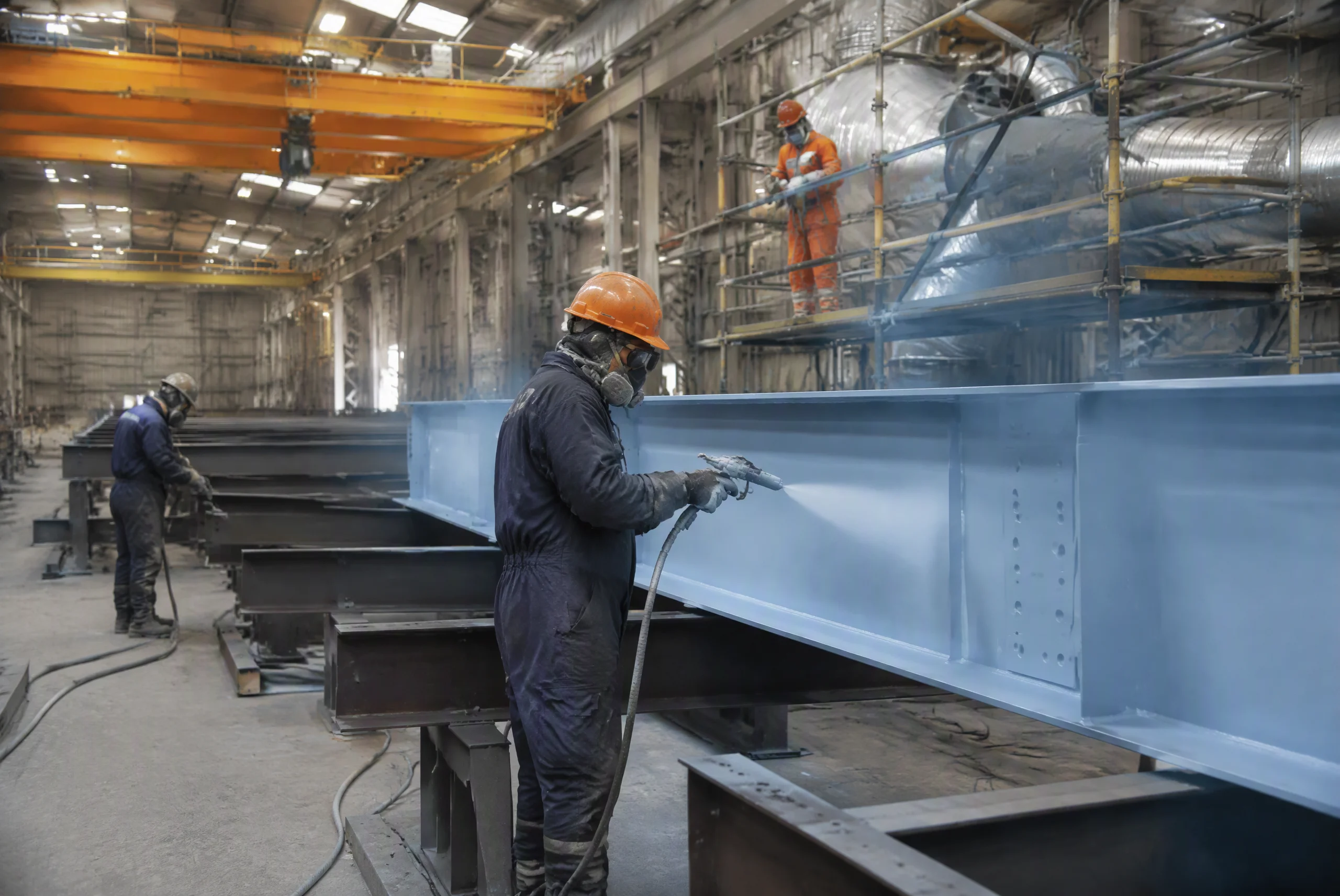
Coating Systems Built for Gulf Exposure
Hot-dip galvanizing, powder coating and zinc-rich multi-coat systems applied under controlled shop conditions — with DFT checks documented per member for C4–C5 environments.
UAE-Specific Approvals to Plan Around
Unlike simple customs import, steel structures in the UAE sit inside a regulated construction chain. Allow approval time in your programme — it runs in parallel with fabrication only if drawings are frozen early.
Structure & Fire Approvals
Dubai Municipality structural approval reviews design calculations and shop drawings against the Dubai Building Code; documents are typically submitted by the client's consultant, so our role is to deliver fabrication-ready drawings that match the approved design without drift. In Abu Dhabi the equivalent review runs through the Department of Municipalities and Transport. Dubai Civil Defence governs fire safety: exposed steel in escape or high-risk zones may need intumescent fire protection with the coating system approved in the fire report.
Free-zone projects (JAFZA, DMCC, Dubai South) follow their own authorities — confirm whether your project is free-zone or mainland, because the approval path and the VAT treatment of the import differ.
Environment & Execution
Coastal humidity, airborne sand and summer surface temperatures change how steel performs. Practical consequences: corrosion protection to ISO 12944 C4–C5, galvanizing plus powder coating where colour and UV stability matter, and sealed, desiccant-protected packing for the sea leg. Sand-laden wind loading and thermal movement are design inputs, not fabrication inputs — make sure the design brief carries them.
Defects liability periods of 12 months are common on private developments and longer on government projects. Tie the fabrication warranty to documented inspection (mill certificates, WPS, coating DFT, fit-up records) so claims are resolvable from the file.
GCC Tariff, VAT and What You Will Actually Pay
The UAE applies the GCC common external tariff plus a 5% VAT on imports. Fabricated steel articles commonly fall under HS 7308 with a 5% duty rate, but some items are duty-free or classified differently — confirm the HS code and rate with a licensed customs broker at the time of import. The figures below are planning guidance, not a binding quote.
| Cost Component | Indicative Magnitude | Notes |
|---|---|---|
| GCC customs duty, steel structures | 5% for most HS 7308 articles; some duty-free | Confirm HS classification and rate at time of import. |
| VAT on import | 5% | Levied on the CIF value plus duty; recoverable for registered businesses. |
| Customs clearance & agency | AED-based fee per shipment | Declaration through Dubai Trade; broker fee plus port charges. |
| Ocean freight, Shanghai→Jebel Ali | USD 55–80 / t (2026 indicative) | About 15–18 days sailing; Khalifa Port is a similar range. |
| Port handling & demurrage | Per container / per tonne | Budget for dwell and any customs inspection holds at Jebel Ali. |
The bottom line: with duty around 5% plus 5% VAT, the landed cost premium over FOB is modest compared with markets like the USA. Total landed cost = FOB + freight + duty + VAT + clearance. Compare on a CIF or DDP basis, not FOB, because freight on fabricated steel — heavy, bulky, often break-bulk — moves the comparison.
We quote FOB and CIF by default and DDP on many UAE routes through our logistics partners, so the buyer sees one landed price. Send the drawings and site location and we will return a duty-optimised breakdown your broker can check line by line.
Timeline to Your UAE Site, Step by Step
Approval cycles, not shipping, are usually the long pole on UAE projects. Build the milestones below into the contract so review dates and payments cannot silently slip the window.
Shop Drawing & Approval — Wk 0-4
We issue Tekla shop drawings and erection plans for the consultant's review and the Dubai Municipality / Abu Dhabi submission. Budget 2–4 weeks; complex grids or trusses run 4–6.
Material Procurement & Mill Certs — Wk 2-5
ASTM A572 / A992 or EN equivalents are ordered per heat; mill certificates are collected and checked before cutting. No substitution without written client approval.
Fabrication & QC — Wk 5-13
A 1,000 t warehouse frame runs 6–9 weeks in our shop. Fit-up to AISC tolerances, 100% weld inspection by certified QC, then the ISO 12944 C4–C5 coating sequence with DFT records per member.
Pre-Shipment Inspection & Loading — Wk 12-14
Optional third-party witness (SGS/BV/TÜV) on welds and coating. Packing is sealed with desiccant and VCI protection for the sea leg; timber is ISPM-15 fumigated and stamped.
Ocean Transit — Wk 14-16
Shanghai/Qingdao to Jebel Ali typically 15–18 days sailing, with 3–7 days port dwell. Khalifa Port in Abu Dhabi runs a similar schedule; break-bulk options exist for very large members.
UAE Customs Clearance & Delivery — Wk 16-18
GCC duty plus 5% VAT paid at clearance. DDP (Delivered Duty Paid) is available on many UAE routes — one invoice, no surprise charges at the gate.
Gulf & Middle East Delivery Experience
Our Middle East record includes airport, education and industrial steelwork across Qatar and the wider region. For Gulf buyers, these projects demonstrate the approval discipline, corrosion protection and erection logistics your contract will demand.
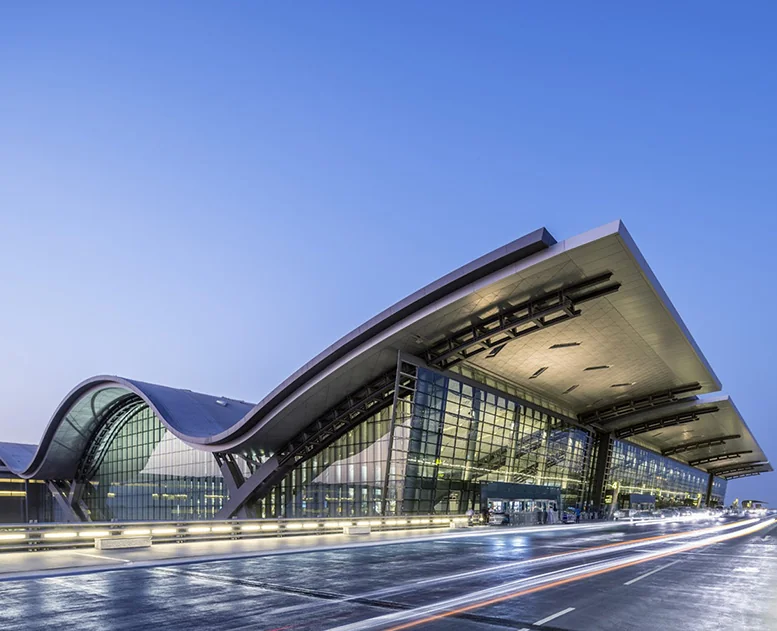
Doha Airport Steelwork
Terminal steel structures at Hamad International Airport, Doha — a Gulf project with airport-grade logistics, tight-tolerance erection and full documentation, the same discipline UAE aviation projects require.
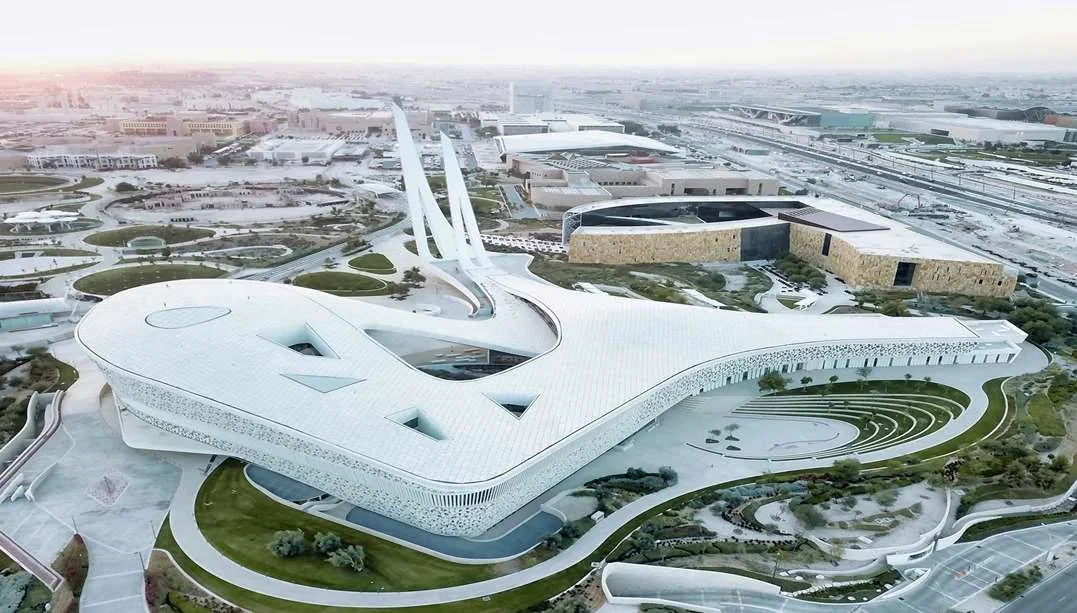
Qatar Landmark Campus
Qatar Faculty of Islamic Studies — a complex curved-roof steel structure delivered to an education client in a demanding Gulf climate, with high architectural finish requirements.
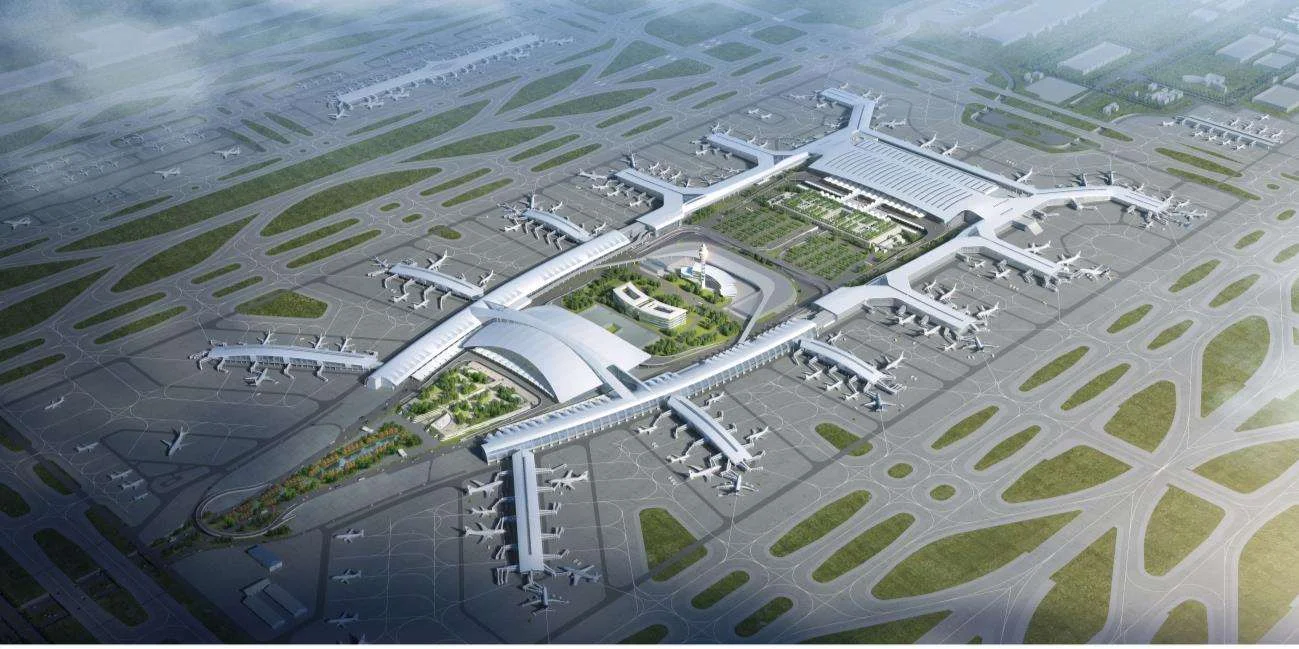
450,000 m² Airport Roof
Guangzhou Baiyun Phase III: 42,000 t of steel in one terminal programme. It demonstrates that airport-scale fabrication and erection capacity is available in a single supply chain serving Gulf projects.
UAE Buyer Questions, Answered
Do you design to AISC 360 or EN 1993 for UAE projects?
Either, per the project. We fabricate to ASTM material equivalents, qualify WPS to AWS D1.1, and issue shop drawings for the consultant's review and the Dubai Municipality / Abu Dhabi approval chain. Independent witness inspection is available before loading.
Who handles Dubai Municipality and Civil Defence approvals?
Your consultant submits the design and fire documents to the authorities; we supply the fabrication file behind them — calculations, shop drawings, mill certificates, weld records and coating DFT data — so the submission does not stall for lack of evidence.
How is corrosion protection handled for the Gulf climate?
We quote ISO 12944 C4–C5 systems: hot-dip galvanizing plus powder coating, or zinc-rich multi-coat paint with specified DFT, verified by third-party inspection where the contract requires it.
What is the realistic total lead time to Jebel Ali?
Plan 16–20 weeks from approved drawings to site delivery on a standard 1,000 t programme, including consultant approval time, fabrication, 15–18 days of transit and customs clearance.
What payment terms do you accept?
30% deposit, 60% against bill of lading, 10% after arrival survey — or LC at sight for public-sector projects. DDP quotes are available on many UAE routes, giving you one fixed landed price.
Get a UAE-Specific Quotation
Send your drawings and site location and we will return: design notes to AISC 360 or EN 1993, FOB/CIF/DDP pricing, a GCC duty and VAT estimate, and a binding fabrication schedule.
Request a Quotation Talk to an Engineer