Steel Structure Projects in the Middle East — Engineered for the Desert
The Gulf builds at a scale and speed that defines modern steel construction — signature towers, airports, universities and industrial cities rising from desert sand. But the Middle East is one of the most demanding structural environments on earth: diurnal temperature swings of 30 °C, design sand temperatures near 80 °C, sand abrasion that strips conventional coatings, and a seismic demand regime many underestimate. Our Middle East projects — from the Qatar Faculty of Islamic Studies to smelter and aviation works — are engineered around these desert realities, not in spite of them.
Five Engineering Realities of the Gulf and Beyond
1. Thermal movement is the dominant load nobody quotes. A desert structure lives inside a daily 30 °C swing, and an 80 m steel roof can move 55-65 mm between dawn and afternoon. Design therefore starts with expansion joints at 60-90 m spacing, fork-plate or slotted connection details that let members breathe, and cladding fixed with sliding clips — never locked hard to the frame. Bearing pads and column bases are detailed for the sliding case, and the frame's second-order (P-Δ) analysis uses the elevated design temperature. A structure detailed for thermal freedom survives the desert; one detailed for a European summer does not.
2. Sand is an abrasion machine and a fine-particulate threat. Windborne sand at 15-25 m/s strips coatings at a rate coastal salt never matches, and 0.1-0.5 mm sand grains work into sliding surfaces, bearings and bolted connections. Our specification for Gulf projects therefore calls for heavier hot-dip galvanizing (85-120 µm per ISO 1461) or duplex systems on external members, protective boots on sliding bearings, sealed fasteners, and connection details that shed sand rather than trap it. In aluminium plants and other process environments, fine particulates also drive the dust-tightness of the envelope — the frame's purlin and girt spacing is set to match the envelope system's sand-tight performance, not just its span capacity.
3. Seismic demand exists where people least expect it. Much of the Arabian Peninsula sits in low-to-moderate seismic zones, but design ground accelerations of 0.1-0.3 g apply across the Gulf coast and into Iran; the latter's plate-boundary zones rise to 0.3-0.5 g and beyond. Every structure we export to the region is analysed for the national seismic code (SBC 301 in Saudi, QC national annex in Qatar, the Iranian code of practice in the Islamic Republic — or ASCE 7 / EN 1998 where the consultant specifies), including the soil-amplification factor at the actual site. The Qatar Faculty of Islamic Studies structure, with its cantilevered and vaulted geometry, demanded particular attention to mass distribution and joint ductility.
4. Architectural steel is structural steel. The Gulf's signature projects use exposed steel as the architecture itself — the QFIS cladding and roof forms, airport terminals, university canopies. Exposed members must satisfy both the structural check and the architectural finish: cut surfaces dressed, welds ground and treated as visible, galvanizing or intumescent coating applied to an AESS (architecturally exposed structural steel) grade. We plan the finish before fabrication — member prep, weld processes and coating order all set so the erected steel is the final aesthetic, not a hidden frame awaiting cladding.
5. Speed and logistics run on a global clock. Gulf programmes compress design-fabrication-erection cycles to 12-24 months for whole industrial cities, and the shipping corridor from Chinese ports to Jebel Ali and Dammam is among the world's most reliable. We run parallel engineering and fabrication streams — foundations detailed while frames fabricate, kits shipped in erection sequence, and a resident team or supervisor deployed for the programme. Our 90-structure Indonesian complex proved the kit-delivery model at scale; the Gulf's industrial estates and aviation programmes work exactly the same way.
The Middle East does not tolerate learning on site. Our engineering for the region is fixed in the design phase — thermal, seismic, sand and finish — so the site crew's job is assembly, not discovery.
Middle East Projects & Deliveries
 Institutional
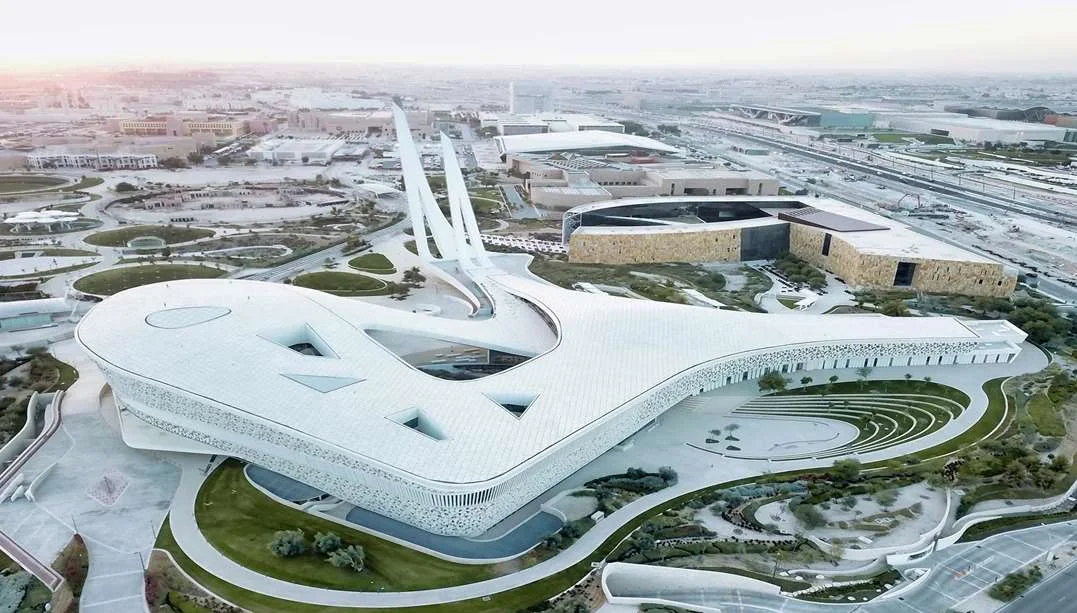
Qatar Faculty of Islamic Studies (QFIS)
Scope: Steel structure and envelope | Demand: Seismic + thermal + AESS finish
A landmark institutional structure whose cantilevered, vaulted steel geometry is the architecture itself. The project demanded AESS-grade member preparation, full seismic analysis to the Qatar national annex, and detailing for the desert thermal regime — expansion joints, sliding connections and a coating system specified for the Gulf's sand and solar exposure.
 Aviation
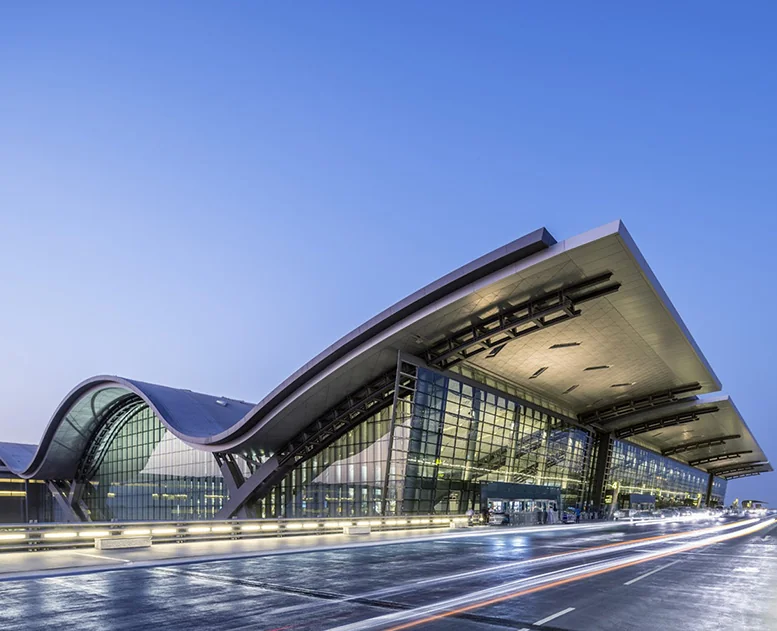
Doha Airport Steel Works
Type: Aviation terminal steel structure | Climate: Desert, sand abrasion zone
Aviation infrastructure in the Gulf is built to the most exacting international standards, and its steel must survive sand abrasion and 50+ °C ambient service in a terminal that runs at full capacity year-round. The delivery combined structural fabrication with the envelope and finishing standards this airport environment demands.
 Industrial
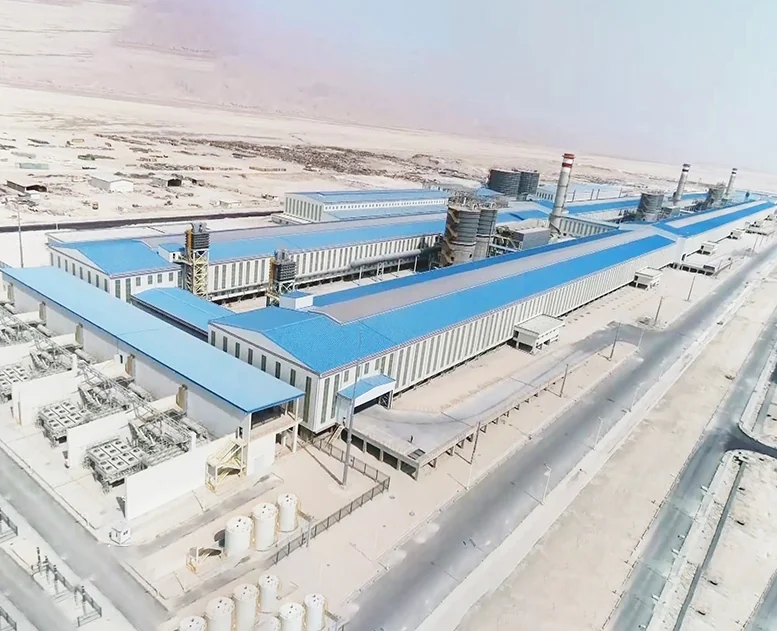
Iran South Aluminium Smelter
Type: Smelter process buildings | Condition: High seismic + process environment
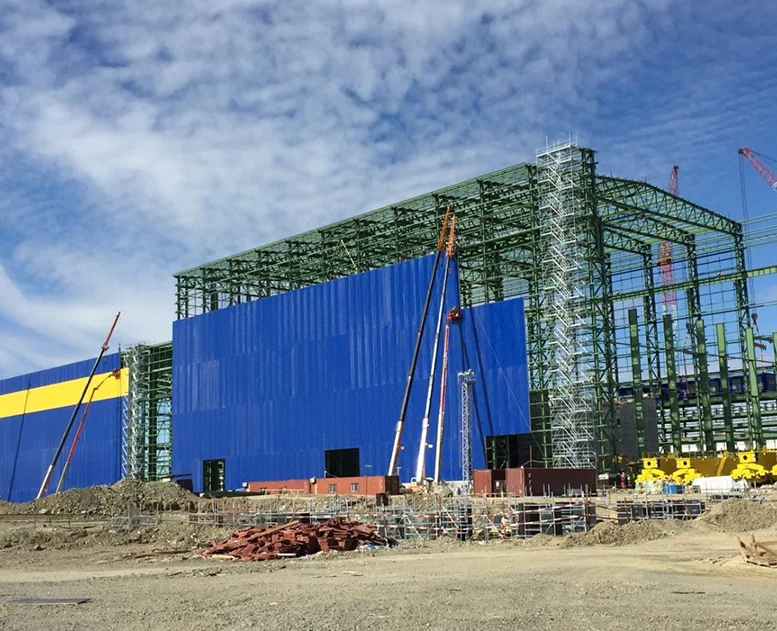
Smelter halls are among the heaviest steel environments a fabricator can supply: large spans to clear pot-lines, crane runways sized for molten-metal handling, and a process atmosphere that combines heat, particulates and the seismic demand of Iran's plate-boundary zones. The structure was engineered for the pot-hall span and crane duty while meeting the national seismic code.
 Mining
Kazakhstan Aktogay Copper Mine Plant
Type: Processing plant steel frames | Condition: Continental climate, heavy process loads
A large copper-ore processing complex on the Central Asian plateau, engineered for a continental climate that swings below -30 °C in winter and above +35 °C in summer — thermal movement, material toughness at low temperature, and the heavy service loads of a mineral processing plant all addressed in one design.
What a Middle East Client Receives From Us
The Gulf's consultants review Chinese fabrication with a sharp eye. Our export package for the region is engineered to pass that review on the first submission:
- Code-aligned design: calculations to the national code or the consultant's choice (SBC / EN 1998 / ASCE 7), including the site's ground type and the elevated thermal design case.
- Thermal and seismic basis: an explicit statement of design temperature range, expansion joint locations, and the seismic design response spectrum used — the two documents Gulf reviewers check first.
- Desert coating and fastener spec: ISO 1461 galvanizing or duplex systems per the exposure zone, A4 stainless fixings, and protective detailing of sliding bearings and connections against sand ingress.
- AESS finish control: where steel is exposed as architecture, a finish plan covering member prep, weld dressing and coating order, executed to the agreed architectural grade.
- Kit-based delivery and supervision: match-marked packages shipped in erection sequence, method statements for the local crew, and optional resident engineering.
Send us the site, the building programme, the national code or consultant standard, and the architectural exposure — you will receive a design basis that addresses the desert before it addresses the steel.
Planning a Steel Structure Project in the Middle East?
Tell us the country and site, the programme, the reference standard, and whether the steel is exposed as architecture. We return the thermal and seismic design basis, coating specification and budget.
Email: market@permanentsteelstructure.com | WhatsApp: +86 18621689980 | Phone: +86 516-83269982