Sustainability & ESG — Steel Is the Greenest Way to Build at Scale
Buildings account for roughly 39% of global energy-related CO₂ emissions — and the structural material choices made today lock in those emissions for decades. At Jiangsu Permanent Steel Structure, we treat sustainability not as a certificate on the wall but as an engineering discipline: measure the embodied carbon, cut it at the source through design and manufacturing, and hand the client a structure that is lighter, faster and almost entirely recyclable. This page sets out our environmental, social and governance commitments with the numbers behind them.
Steel vs Concrete: The Embodied Carbon Reality
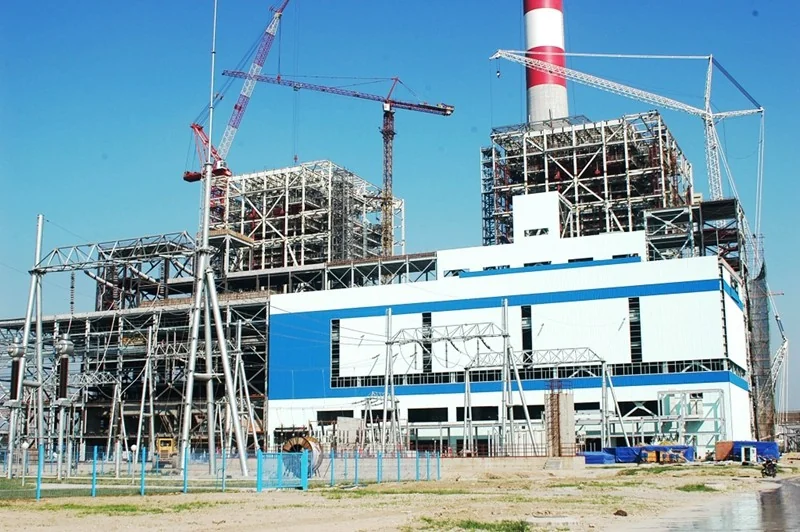
The honest comparison starts with function, not weight. A steel frame and a concrete frame for the same building perform different jobs, so comparing tonnes is misleading. On a fair basis — the same spans, loads and service life — steel construction typically cuts embodied carbon by 20-35% versus reinforced concrete and, critically, by 70-90% at end of life, because the steel is recovered and recycled rather than demolished to landfill. Three mechanisms drive the advantage:
1. Material is used where it works. A steel beam carries load along its section depth with nothing wasted; a concrete member carries most of its tonne as dead weight that the foundations must carry too. Because steel's strength-to-weight ratio is roughly 2-3 times that of reinforced concrete, the structural dead load of a steel frame is typically 40-60% lower — and so are the foundations, and so is the construction-phase transport energy.
2. Fabrication precision is emissions accounting. Our CNC cutting, robotic welding and production-line fabrication mean tolerance waste stays in the shop, not on the site. Offcut steel returns to the melt shop — steel is the world's most recycled material, with recovery rates above 90% in construction demolition — while concrete requires on-site cutting, breaking and hauling to landfill that emits further CO₂ through transport and cement-bound handling.
3. Design for lighter structures is the biggest lever of all. The 5,244 m² Antarctic Ross Sea Station had to minimise every kilogram shipped to the edge of the world — the same optimisation that cuts carbon per square metre by 15-25% on any project applies headroom, member sizing and connection detailing. Lighter steel is not just cheaper shipping; it is less material, less energy and less CO₂ at every upstream step.
Where we go further: BIPV (building-integrated photovoltaics) finishes and metal roof systems that accept solar integration are part of our envelope portfolio, and high-performance insulation sandwich panels reduce operational energy for the building's whole life — the operational carbon is larger than the embodied carbon for most buildings, and envelope performance governs it.
Manufacturing With the Lights On for the Planet
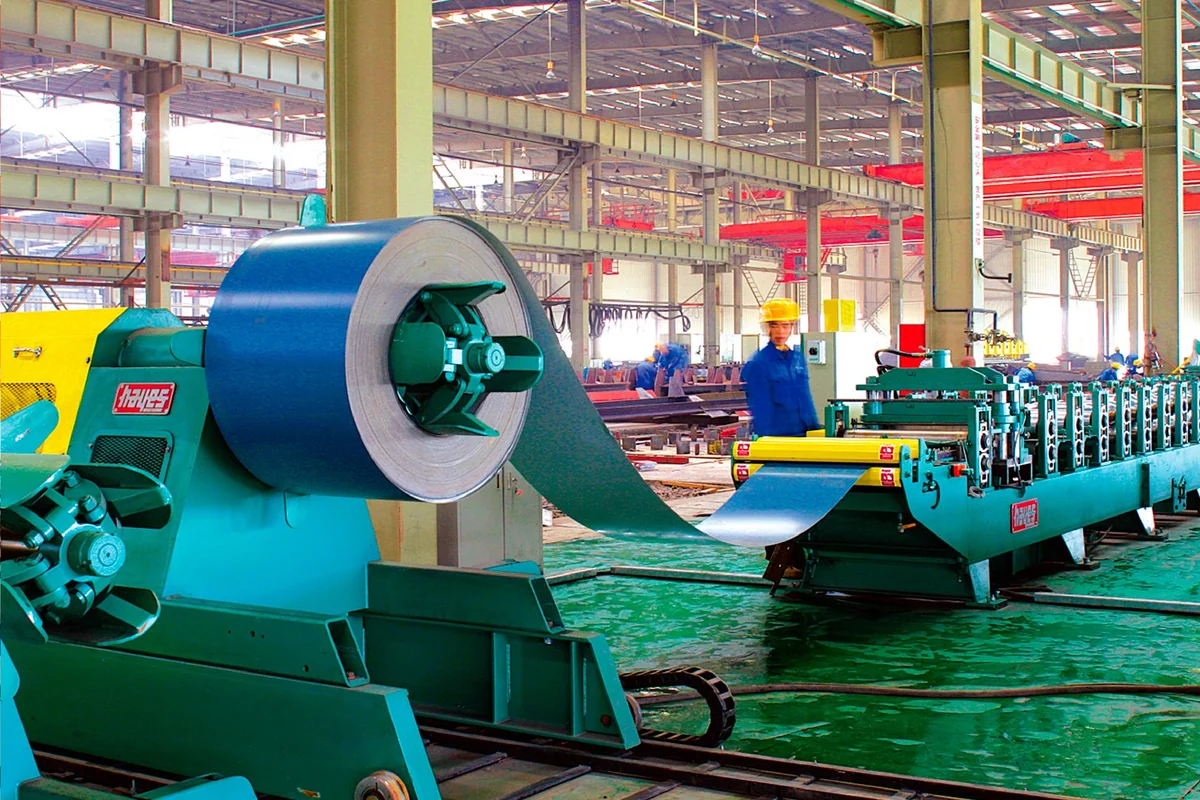
Green manufacturing at our plants is a measured system, not a slogan:
- ISO 14001 environmental management: our plants operate a certified environmental management system covering energy monitoring, waste segregation and continuous improvement — the discipline is audited, not assumed.
- Intelligent production lines: CNC flame/plasma cutting, automated welding and digital tracking cut rework, which is the most expensive form of waste — environmentally as well as financially.
- Zero-waste steel loop: scrap and offcuts are segregated and returned to the melt shop; the same material returns as new sections, keeping steel in the loop that global recycling economics already reward.
- Coatings in controlled enclosures: shot-blasting and coating are performed in enclosed, recovered-fume environments, capturing particulates and VOCs rather than releasing them.
- Energy intensity per tonne: fabrication energy is tracked per tonne of output; the leaner the fabrication flow, the lower the per-tonne energy — and the lower it is, the cheaper and greener the delivered steel.
The proof is in the numbers and the certificates: our about page documents the management-system certifications that govern these environmental controls.
90%+: Steel's Endless Loop
Steel is the world's most recycled material. Structural steel beams and plates are recovered at demolition at rates above 90%, sorted magnetically, and remelted into new sections indefinitely without losing their physical properties — a steel beam recycled today can be a new beam of equal grade tomorrow. This is the fundamental difference from cement-bound construction:
Steel: every tonne of structural steel is a stored asset — recoverable, remeltable, reusable. The value of scrap steel is high enough that demolition contractors actively recover it; the material pays part of its own dismantling cost.
Concrete: most demolished concrete is crushed to aggregate — downcycling, not recycling — and the cement kilns that made it remain the source of roughly 8% of global CO₂ emissions with no viable recovery loop.
For our clients this means an asset, not a burden: the steel structure you buy from us is a long-term recyclable asset whose residual value survives the building's whole life. When the building is eventually replaced, its frame will be worth money, not landfill fees.
How Our Systems Support LEED & BREEAM
Sustainability ratings reward measurable decisions. Our product and engineering choices map directly to credits in LEED v4/v4.1 and BREEAM:
- Materials & Resources (LEED MR; BREEAM Mat 01/03): high recycled content in steel — structural steel typically contains 20-40% recycled material — and documented regional sourcing strengthen material-origin credits.
- Energy & Atmosphere (LEED EA; BREEAM Ene): insulated sandwich panels and BIPV-ready metal roofs cut envelope thermal bridging and support on-site renewable generation.
- Indoor Environmental Quality: precision-fabricated steel ensures tight joints and fewer air leakage paths — supporting ventilation efficiency and comfort credits.
- Life Cycle & Resilience: optimised, lighter steel reduces embodied carbon per m² and improves the building's ability to adapt — both rewarded in modern rating frameworks.
We work with the project's sustainability consultant from concept: the documentation trail (material certificates, recycled content declarations, fabrication energy data) is produced as we build, ready for the credit submission.
People, Communities and the Way We Govern
Workforce excellence. Our welders are certified to international standards (ISO 9606 / EN 287 equivalents), our engineers hold professional registrations, and our plants invest continuously in training and safety. A company that welds the Antarctic station to specification is a company whose people are its strongest asset — and we run the plant like it.
Health & safety. Fabrication plants and erection sites both operate under formal safety management systems: daily toolbox talks, permit-to-work for high-risk operations, and full PPE enforcement. Safety statistics are reported and reviewed at management level — governance begins with the people on the ground.
Community contribution. From our base in Xuzhou, Jiangsu, we contribute through employment, supplier development and industry participation — as a China Steel Structure Gold Award winner and a member of the China Construction Industry Association, we carry engineering integrity as a community obligation, not just a company interest.
Governance & transparency. We publish the certifications that govern our quality, environmental and management systems, maintain traceability from mill certificate to delivered member, and document our projects with the rigour third-party inspectors demand. That transparency — auditable from day one — is our governance model.
Ask Us for the Numbers Behind the Steel
Whether you are benchmarking embodied carbon, targeting a LEED/BREEAM credit, or simply want to understand what your structure will weigh on this planet — request the sustainability file of any project or product line. We respond with data, not adjectives.
Email: market@permanentsteelstructure.com | WhatsApp: +86 18621689980 | Phone: +86 516-83269982