
Cold-Climate Steel Structure Engineering: A Complete Guide
When a steel structure must perform at −40°C, the engineering rules change. Materials that are perfectly adequate at 20°C become brittle. Welding procedures that produce sound joints in summer can introduce hydrogen-induced cracking in winter. Thermal expansion and contraction accumulate over long spans, creating forces that can shear bolts or buckle members. And construction itself must happen within a window that nature dictates, not the project schedule.
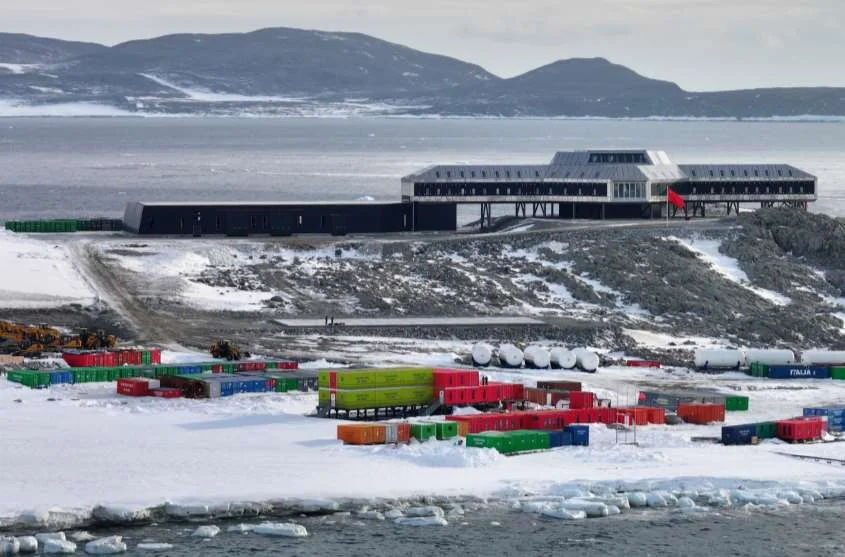
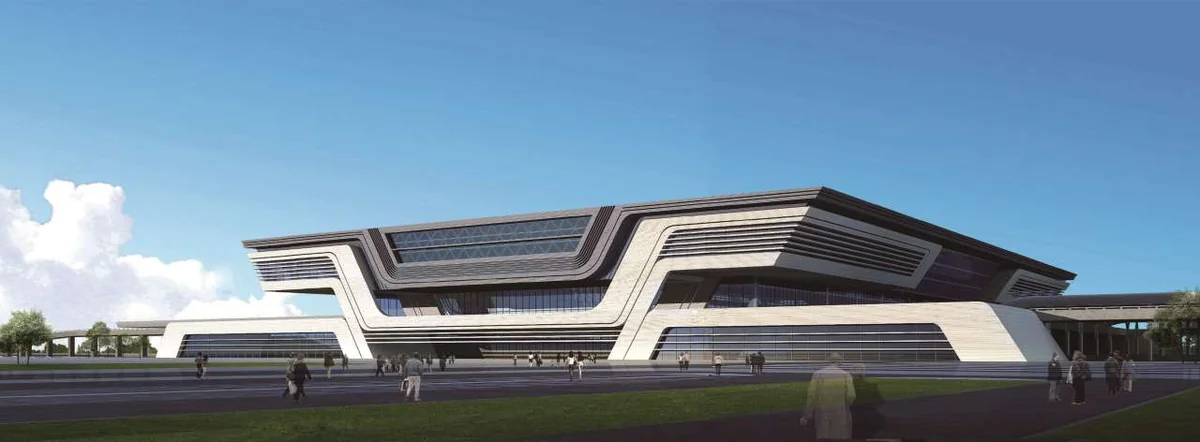
At Permanent Steel Structure, we have engineered and fabricated structures for both the Antarctic Ross Sea Station and the Daqing West Railway Station — two projects at opposite ends of the cold-climate spectrum. The Antarctic station represents the extreme: temperatures below −40°C, katabatic winds exceeding 200 km/h, and a logistics chain that crosses the Southern Ocean. The Daqing station represents the operational extreme for inhabited structures: winter lows of −28°C, permafrost-affected soils, and a public building that must perform for decades.
This guide distills the engineering decisions that make cold-climate steel structures work. It is written for project owners, design engineers, and contractors who need to understand the technical requirements before steel is cut or welded.
1. Low-Temperature Steel Material Selection
The single most important decision in cold-climate steel engineering is the steel grade. Chinese standard GB/T 1591 classifies low-alloy high-strength structural steel by impact toughness temperature tiers. The suffix letter (B, C, D, E) indicates the minimum temperature at which the steel must achieve a minimum Charpy V-notch impact energy of 27 J (for Q355 and Q390 grades) or 31 J (for Q420 and Q460 grades).
Charpy V-Notch Impact Testing: The Governing Criterion
Charpy V-notch (CVN) testing measures the energy a material absorbs during fracture at a specified temperature. For cold-climate structures, CVN is not a formality — it is the primary filter that prevents brittle fracture. The critical distinction between grades lies in their guaranteed CVN performance temperature:
- Q355B: CVN tested at +20°C (27 J minimum). Suitable for standard ambient conditions only. Not suitable for structures exposed to sustained sub-zero temperatures.
- Q355C: CVN tested at 0°C (27 J minimum). Suitable for cold regions with occasional freezing temperatures, such as northern China winter conditions down to approximately −15°C.
- Q355D: CVN tested at −20°C (27 J minimum). Suitable for sustained cold conditions down to approximately −35°C. This is the primary grade we used for the Antarctic Ross Sea Station primary frame.
- Q355E: CVN tested at −40°C (27 J minimum). Reserved for the most extreme applications where service temperatures approach −50°C.
The Charpy transition curve is not a sharp threshold but a gradual shift from ductile to brittle behaviour. A steel that passes at −20°C may still show reduced toughness at −35°C. For this reason, we specify a service temperature margin: if the minimum expected service temperature is −30°C, we select a grade tested at least 10°C below that, which means Q355D (tested at −20°C) for −30°C service, or Q355E for −40°C service.
Yield Strength Retention at Low Temperature
Unlike aluminium or titanium, structural steel's yield strength actually increases at low temperatures. Tests on Q355D show yield strength increases of 10-15% at −40°C compared to room temperature. This is beneficial for static loading but must be considered in capacity design: a member that is adequate by yield at 20°C may have a higher actual yield at service temperature, which can shift the failure mode toward brittle fracture if the toughness is insufficient. The governing design criterion in cold climates is therefore toughness, not strength.
Plate Thickness and Through-Thickness Considerations
Thicker plates exhibit lower toughness due to the higher constraint at the plate centre and the statistical probability of larger flaws. For Q355D, the guaranteed impact energy of 27 J applies to plates up to 63 mm thickness. For thicker sections, we require per-heat testing and may specify Z35 through-thickness properties (35% minimum reduction of area) for T-joints and cruciform connections where lamellar tearing is a risk.
2. Welding Procedures for Sub-Zero Conditions
Welding in cold environments introduces two dominant failure modes: hydrogen-induced cold cracking (HICC) and toughness degradation in the weld metal and heat-affected zone (HAZ). Both are preventable with properly developed welding procedure specifications (WPS), but the cost of prevention is discipline — you cannot shortcut preheat, interpass control, or hydrogen management.
Preheat Temperature: 80-120°C Baseline
Preheat serves three functions: it reduces the cooling rate of the weld (preventing martensite formation in the HAZ), it allows hydrogen to diffuse out of the weld metal before it can cause cracking, and it reduces thermal gradients that cause residual stress. For Q355D steel welded with low-hydrogen electrodes at ambient temperatures below 5°C, we specify a minimum preheat of 80°C for plate thicknesses up to 25 mm, increasing to 120°C for 25-50 mm thickness.
The preheat temperature must be measured 75 mm from the weld centreline on both sides of the joint, using temperature-indicating crayons (Tempilstik) or a contact pyrometer. Preheat must be maintained until the weld is completed and the interpass temperature must not drop below the preheat minimum at any point during welding.
Low-Hydrogen Electrodes and Filler Metal Selection
For shielded metal arc welding (SMAW) of cold-climate structures, we use electrodes classified as E7018-H4R. The H4 designator indicates a maximum diffusible hydrogen content of 4 mL per 100 g of deposited weld metal. The R suffix indicates resistance to moisture pickup, which is critical in cold environments where electrode baking and storage discipline may be compromised by site conditions.
For gas metal arc welding (GMAW) and flux-cored arc welding (FCAW), we specify filler metals with a minimum CVN toughness of 27 J at the service temperature. For the Antarctic project, we used ER70S-6 solid wire with a shielding gas mixture of 80% Ar / 20% CO2, producing weld metal with 47 J at −20°C — well above the minimum requirement.
Interpass Temperature Control
Interpass temperature must be controlled within a range: minimum equal to the preheat temperature (80-120°C), maximum typically 250°C for Q355D. Exceeding the maximum interpass temperature can cause grain coarsening in the HAZ, reducing toughness. This is measured immediately before each weld pass. In cold environments, maintaining minimum interpass is the greater challenge — wind chill can drop a weld zone from 120°C to 40°C in minutes, which is why enclosed welding areas are essential (discussed in Section 5).
Hydrogen Diffusion Treatment (Post-Heat)
For highly constrained joints (T-joints, box-column-to-base-plate connections, thick-walled tube intersections), we apply a hydrogen diffusion treatment of 200-230°C for 1-2 hours immediately after welding, before the weld cools below 80°C. This accelerates hydrogen escape and prevents delayed cracking, which can occur 48-72 hours after welding in cold environments.
3. Thermal Movement Design
Steel has a coefficient of linear thermal expansion (α) of 12 × 10-6 /°C. While this seems small, over a long span with a large temperature differential, the total movement is substantial. For a 65-meter span structure experiencing a 70°C temperature swing (from −35°C winter night to +35°C summer day in continental cold climates), the thermal expansion is:
ΔL = α × L × ΔT = 12 × 10-6 × 65,000 mm × 70 = 54.6 mm
This 55 mm of movement must be accommodated somewhere in the structure. If both ends of the span are rigidly fixed, the thermal force generated would be enormous — approximately the axial stiffness of the member times the displacement — and would cause connection failure or member buckling. The standard solution is to provide one fixed support and one sliding (expansion) bearing, allowing the structure to expand and contract freely in one direction while maintaining lateral stability.
Sliding Bearing Design
For roof structures and long-span grids, we use PTFE (Teflon) sliding bearings on stainless steel plates. The coefficient of friction for PTFE on stainless steel is 0.04-0.08, which means the horizontal force transmitted to the supporting structure is only 4-8% of the vertical load. For a 65 m span with a vertical reaction of 800 kN, the sliding friction force is only 32-64 kN — manageable for the substructure design.
In cold climates, PTFE bearings require an additional consideration: at −40°C, PTFE becomes harder and the friction coefficient increases to 0.10-0.15. This must be accounted for in the bearing design and the substructure load calculations.
Expansion Joints in Cladding Systems
The building envelope (metal roof panels, wall cladding) experiences even larger thermal movement than the primary structure because it is exposed directly to solar radiation and ambient temperature. Standing seam roof panels can experience surface temperatures of +60°C in summer sun and −40°C in winter, a 100°C range. For a 50 m continuous roof panel, this is 60 mm of movement. We specify sliding clip fasteners that allow the panel to move relative to the purlins without transferring force to the fastener, which would otherwise fatigue and fail.
4. Anti-Corrosion Systems for Polar and Sub-Arctic Environments
Cold climates are not automatically less corrosive. The Antarctic environment, while dry, has salt-laden air from sea spray and UV radiation that degrades coatings. Continental cold climates with permafrost can have aggressive soil chemistry. The ISO 12944 standard classifies the Antarctic coastal environment as C5-M (Marine, very high corrosivity), while industrial cold regions (coal sheds, power plants) are typically C4 (high) or C5-I (industrial, very high).
For the Antarctic Ross Sea Station, we specified a three-coat system:
- Primer: Inorganic zinc-rich primer, 75 μm dry film thickness (DFT). Provides cathodic protection to the steel substrate.
- Midcoat: Epoxy micaceous iron oxide (MIO) barrier, 125 μm DFT. Provides the primary barrier to water and chloride ingress.
- Topcoat: Aliphatic polyurethane, 50 μm DFT. UV-resistant, colour-stable, and maintains flexibility at low temperatures.
- Total DFT: 250 μm minimum, 300 μm target.
The polyurethane topcoat is critical: standard epoxy topcoats become brittle below −10°C and can crack under thermal cycling. Aliphatic polyurethane retains flexibility to −40°C, accommodating substrate movement without cracking.
For more on coating system selection per ISO 12944 categories, see our ISO 12944 anti-corrosion guide.
5. Winter Construction Protocols
Construction in cold climates is not merely a matter of dressing warm. The welding environment, material handling, concrete curing, and erection sequencing all require modifications that add cost and time. Understanding these constraints during the design phase prevents costly field improvisation.
Heated Welding Enclosures
Wind chill is the enemy of cold-weather welding. A 5 m/s wind at −20°C creates a wind chill equivalent of −30°C, and the gas shielding in GMAW/FCAW is disrupted, causing porosity. We construct enclosed welding areas using insulated tent structures with electric or propane heaters, maintaining the interior at a minimum of +5°C. These enclosures are particularly important for overhead and vertical welding positions where the shielding gas is most vulnerable to wind disruption.
Material Pre-Conditioning
Steel arriving at the site may be at ambient temperature (−30°C). Before welding, the steel must be brought to the preheat temperature. This requires preheating a larger zone than in summer — typically 300 mm on each side of the weld for cold-weather work, compared to 100 mm in normal conditions. Induction heating blankets are preferred over torch heating because they provide uniform, controllable heat without the flame impingement that can cause local overheating.
Concrete and Foundation Work
Steel structures require foundations, and in cold climates, foundation work is the schedule-critical path. Permafrost soils must be protected from thawing during construction (using thermosyphons or ventilation), and concrete must be cured with insulation blankets and possibly internal heating. For the Daqing West Station, foundation pours were completed in October, with the steel erection beginning in November when the concrete had achieved 70% of its 28-day strength — the minimum for bearing the steel erection loads.
Erection Sequencing
In the Antarctic, the construction window is approximately 60 days during the austral summer (November-January). This means the entire structure must be designed, fabricated, pre-assembled, shipped, and erected within a constraint that does not exist in temperate climates. Modular construction is the answer — the structure is designed as discrete modules that are bolted together on site, with no field welding required. This is covered in detail in our Antarctic modular construction case study.
6. Structural Design Considerations Beyond Material
Cold-climate engineering extends beyond steel grade selection into the structural design philosophy itself. Three additional factors require explicit attention:
Snow Load and Ice Accumulation
Roof structures in cold climates must be designed for snow loads that can exceed 4.5 kN/m2 (equivalent to approximately 450 kg/m2 of wet snow). The Chinese load code GB 50009 specifies snow load by region, with the heaviest snow zones (Xuzhou is moderate, but projects in Heilongjiang and Xinjiang require category III or higher). For the Antarctic station, snow accumulation was modelled using CFD to predict drift patterns around the building form, leading to a raised platform design that allows snow to pass beneath the structure rather than accumulating against it.
Wind Load at Extreme Velocities
Katabatic winds in Antarctica reach sustained velocities of 200+ km/h (55 m/s). The wind pressure at this velocity is:
w = 0.5 × ρ × v2 = 0.5 × 1.29 kg/m3 × (55)2 ≈ 1,950 Pa (1.95 kN/m2)
With a wind shape factor (Cp) of 0.8 for windward walls and −0.5 for leeward, the net pressure differential on a building can reach 2.5 kN/m2. For a building with 500 m2 of windward surface, this is 1,250 kN of horizontal force — equivalent to the weight of 127 metric tons. The structural frame, foundations, and cladding attachments must all be designed for this loading.
Fatigue From Thermal Cycling
Thermal cycling between summer highs and winter lows creates cyclic stress in connections. Over a 50-year design life, a cold-climate structure may experience 50 major annual thermal cycles (ΔT > 50°C) and thousands of smaller daily cycles. Connection details that are acceptable in temperate climates may develop fatigue cracks under this loading. Slip-critical bolted connections are preferred over welded connections for primary members in cold climates because they eliminate the fatigue-prone weld toe.
7. Inspection and Quality Assurance
Cold-climate welding demands more rigorous inspection than standard construction. Our QA protocol includes:
- 100% visual inspection of all welds, performed by a certified welding inspector (CWI) to AWS D1.1 or GB 50661.
- 100% ultrasonic testing (UT) of all full-penetration welds on primary members, with acceptance criteria per GB/T 11345 Class B.
- Magnetic particle testing (MT) on 20% of fillet welds and all weld root passes that are back-gouged.
- Welding procedure qualification at the minimum service temperature, with CVN testing of the weld metal, HAZ, and base metal. This is above code requirements but essential for cold-climate confidence.
Our manufacturing facility holds Special-Class qualifications for steel structure manufacturing (see our qualifications page), which means our welding procedures, welder certifications, and inspection protocols are audited and verified by third-party certification bodies. For cold-climate projects, we add project-specific procedure qualifications that test the actual joint configurations at the actual service temperature.
8. Project Case Studies
Antarctic Ross Sea Station
China's Antarctic Ross Sea Station (also known as Qinling Station) is located on Inexpressible Island in Terra Nova Bay. The station experiences winter temperatures below −40°C, katabatic winds exceeding 200 km/h, and has a construction window of approximately 60 days per year. Our scope included the steel structural frame, which was designed as a modular system with bolted connections to eliminate field welding. The steel grade was Q355D for primary members and Q355C for secondary members. All welds were completed in our Xuzhou factory under controlled conditions, inspected, and shipped as pre-fabricated modules. The anti-corrosion system was ISO 12944 C5-M with a total DFT of 300 μm. Read the full project case study →
Daqing West Railway Station
The Daqing West Station in Heilongjiang Province experiences winter lows of −28°C. The steel structure uses Q355C for the primary frame, with slip-critical bolted connections for all primary joints. Expansion bearings were designed for a thermal movement of 42 mm over the 50 m main span, accounting for a 70°C temperature differential. The station has been in service since 2013 with no structural issues reported. Read the full project case study →
Key Takeaways
- Material selection is the first line of defence. Q355B is inadequate for cold climates. Q355C handles moderate cold; Q355D is the baseline for extreme cold; Q355E is reserved for polar conditions. Charpy V-notch testing at the service temperature is non-negotiable.
- Welding discipline prevents hydrogen cracking. Preheat at 80-120°C, low-hydrogen electrodes (H4 designator), interpass temperature control, and hydrogen diffusion treatment for constrained joints are all mandatory, not optional.
- Thermal movement must be calculated and accommodated. A 65 m span with 70°C temperature swing moves 55 mm. Provide sliding bearings, expansion joints, and flexible cladding attachments.
- Construction logistics drive design. In the Antarctic, there is no room for field welding. Design for modular bolted assembly and pre-fabricate everything. In continental cold regions, schedule foundation pours before the ground freezes.
- Anti-corrosion systems must be temperature-appropriate. Standard epoxy topcoats embrittle in cold. Use aliphatic polyurethane topcoats that retain flexibility at −40°C.
Cold-climate steel structure engineering is not a single decision but a system of interrelated choices: material, welding, thermal movement, corrosion protection, construction method, and inspection. Each choice constrains the others. Getting it right requires a fabricator with cold-climate experience, the right manufacturing qualifications, and an engineering team that has actually built in these conditions. If your project involves extreme cold, contact our engineering team — we have done this before.
Need Expert Engineering for Your Cold-Climate Steel Structure Project?
Our engineers bring 25+ years of experience designing, fabricating, and erecting steel structures for environments from −40°C Antarctic conditions to northern China railway stations. Send us your drawings, specifications, or a concept sketch, and our engineering team will respond within 24 hours with a feasibility assessment and preliminary quotation.
Request a Consultation